
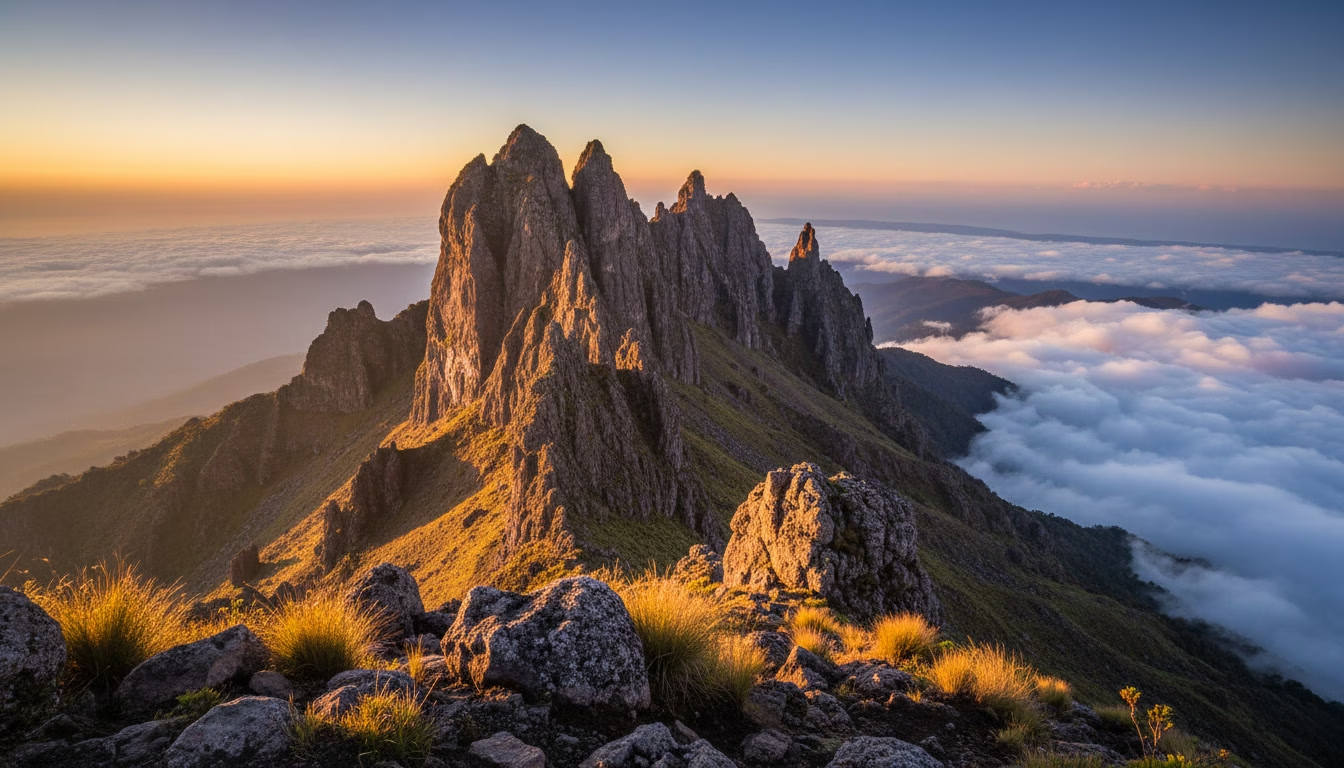
Chirripó National Park is one of Costa Rica’s most remote and demanding natural areas. Nestled in the Talamanca mountain range, it is home to Cerro Chirripó, the country’s highest point at 3,820 metres above sea level. Every year, thousands of hikers come here seeking the challenge of the ascent, the richness of the ecosystems they traverse, and the rare spectacle of a sunrise visible from both oceans. Here is a complete guide with everything you need to know before setting off.
| Detail | Information |
|---|---|
| Summit altitude | 3,820 m (Cerro Chirripó) |
| Park area | 50,150 hectares |
| Starting point | San Gerardo de Rivas |
| Distance one way (main trail) | 20 km (from San Gerardo) |
| Elevation gain | Approximately 2,000 m |
| Average ascent time | 7 to 12 hours |
| Best time to visit | December to April (dry season) |
| Entrance fee | $18 per person per day |
| Daily quota | 60 visitors maximum per day |
| High-altitude accommodation | Los Crestones Lodge (3,400 m), ~$35–40 |
| Reservation | Mandatory via sinac.go.cr |
| UNESCO listing | La Amistad Biosphere Reserve |
Where Is Chirripó National Park and Why Is It So Famous?
Location in the Talamanca Mountain Range
The park is located in southern Costa Rica, at the heart of the Talamanca mountain range, the country’s longest chain of mountains stretching some 320 kilometres. To reach it, you need to head to San Gerardo de Rivas, a small village roughly 20 km north-west of San Isidro del General, itself accessible from San José via the Pan-American Highway — a total distance of 153 km.
Cerro Chirripó: Costa Rica’s Highest Point (3,820 m)
Cerro Chirripó stands at 3,820 metres above sea level, making it not only the roof of Costa Rica but also the second highest peak in all of Central America, after Tajumulco in Guatemala. Its name, drawn from the indigenous Bribri language, translates as “land of enchanted waters” — a reference to the many glacial lakes scattered across its slopes.
A Site Recognised for Its Biodiversity and Listed by UNESCO
Established in 1975, Chirripó National Park forms part of the La Amistad Biosphere Reserve, recognised as a UNESCO World Heritage Site. This international distinction highlights the territory’s exceptional ecological importance, protecting more than 50,000 hectares of forests, wetlands and high-altitude landscapes that shelter globally threatened species.
Geography, Altitude and Climate of Chirripó National Park
Varied Ecosystems: Tropical Forest, Cloud Forest and Páramo
The park features a mosaic of ecosystems directly shaped by its extreme variations in altitude, ranging from 1,200 to 3,820 metres. Climbing from San Gerardo, you first pass through the lower montane tropical rainforest, then the cloud forest where trunks disappear beneath moss and epiphytes, before reaching the páramo — a high-altitude ecosystem found nowhere else in Central America.
A Constantly Changing Climate Depending on Altitude
In the lower sections of the park, temperatures range between 20 and 30°C. As you ascend, the thermometer drops sharply. Around 3,400 metres, near the Los Crestones lodge, daytime temperatures hover between 4 and 18°C. The park receives up to 3.5 metres of annual rainfall, which explains the density of its vegetation even at high altitude.
Why Chirripó Is Costa Rica’s Coldest Zone
At the summit of Cerro Chirripó, nights can drop below 0°C, especially between December and March. This phenomenon, rare in the tropics, results from a combination of altitude, wind exposure and lower relative humidity during the dry season. Morning frosts are common, which explains the lunar-like landscape greeting hikers at the top.
Wildlife and Flora of Chirripó National Park
Iconic Animals: Quetzal, Tapir, Puma and Howler Monkeys
The resplendent quetzal, the Baird’s tapir, the puma and the howler monkey are among the park’s most emblematic species. The jaguar is also present, though sightings remain rare. These animals enjoy a protected sanctuary here, far from the agricultural pressures affecting much of Costa Rica’s territory.
Over 400 Bird Species to Observe
Chirripó National Park is home to more than 400 bird species, several of them endemic to the Talamanca range. Birdwatchers come especially to spot the resplendent quetzal and various high-altitude hummingbird species. Calm mornings, between the cloud forest and the páramo, offer the best conditions for finding these rare birds.
Unique Flora: Oaks, Orchids and High-Altitude Bamboo
Vegetation changes dramatically as altitude increases. In the montane forest, giant oaks reaching 50 metres dominate the canopy, accompanied by tree ferns and orchids clinging to branches. Higher up, dwarf bamboo and cushion plants resist the extreme conditions of the páramo, forming a botanical landscape as disconcerting as it is fascinating.
Climbing Cerro Chirripó: Costa Rica’s Legendary Trek
Distance, Difficulty and Elevation Gain
From San Gerardo de Rivas, the main trail covers 20 kilometres to the summit, with an elevation gain of roughly 2,000 metres. The ascent takes between 7 and 12 hours depending on fitness level. The descent requires 5 to 7 hours. Most hikers complete the trek over two days, spending a night at the Los Crestones lodge, located 14.5 km from the trailhead at 3,400 metres altitude.
The 3 Routes to the Summit
Three official routes lead to Chirripó. The first, starting from San Gerardo de Rivas, is the most popular and the only one that does not require a mandatory guide. The second departs from San Jerónimo and requires a guide. The third, more demanding, begins at Herradura, passes through Bajo de los Indios at 3,330 metres, and is the only trail in the country where you walk above 3,600 metres for more than 10 kilometres.
The Sunrise Experience Between the Pacific and the Caribbean
Most hikers leave the Los Crestones lodge before 4 a.m. to reach the summit at sunrise. On clear days, the view stretches from the Pacific coast to the west all the way to the Caribbean Sea to the east. This 360-degree panorama over the whole of Costa Rica remains one of the most breathtaking visual experiences I have encountered throughout Central America.
The Most Remarkable Sites and Landscapes of the Park
Los Crestones and Their Spectacular Rock Formations
Los Crestones are rock formations created by the folding of the Earth’s crust. These dark stone ridges, sculpted by erosion, are regarded as a national symbol of Costa Rica. The base camp bearing their name sits at their foot, at 3,400 metres altitude, and serves as the launching point for the final push to the summit in the early hours.
The Valley of the Lakes and Glacial Moraines
A short descent from the lodge reveals the Valley of the Lakes, which holds three glacial lakes whose waters feed the Chirripó River. These basins, enclosed within moraine cirques, are a reminder that this region was once covered by glaciers. The moorland vegetation surrounding the lakes, combined with the changing reflections on the water, creates landscapes of a strange beauty.
Sabana de los Leones and the High-Mountain Scenery
Sabana de los Leones is the only high-altitude savannah in Costa Rica. This windswept grassy plateau offers a striking contrast with the dense forests of the lower slopes. Various types of vegetation adapted to alpine conditions grow here, and the sweeping views over the Valle del General add yet another dimension to this already sensation-filled trek.
How to Plan Your Visit to Chirripó National Park
Access via San Gerardo de Rivas
The official starting point is San Gerardo de Rivas, 153 km from San José. From the capital, take the Pan-American Highway to San Isidro del General, then a secondary road heading north-west. A 4×4 vehicle is recommended for the final kilometres. Private shuttles are available from San José and San Isidro for those not driving themselves.
Entry Permits, Quotas and Mandatory Reservations
Entry into the park is strictly limited to 60 people per day. Permits are purchased exclusively online via sinac.go.cr, at a cost of $18 per person per day. No on-site reservations are possible. During peak season and public holidays, spots sell out months in advance. The park also closes for the last two weeks of May for trail maintenance.
Accommodation and the Los Crestones Lodge
The Los Crestones lodge, at 3,400 metres altitude, is the only authorised accommodation inside the park. It offers dormitories, cold showers and a catering service managed by the local CRC Chirripó consortium. Overnight rates are around $35 to $40. Meals are charged separately — approximately $11 for lunch — and must be booked at the same time as lodging.
What Is the Best Time to Visit Chirripó?
Dry Season and Ideal Hiking Conditions
The best period for climbing Chirripó runs from December to April, with a peak between January and March. During these months, rainfall is rare, trails are in better condition and the chances of a clear summit at sunrise are significantly higher. The wet season, from May to November, can offer lusher vegetation, but trails become slippery and summit views are often obscured.
Weather Conditions at Altitude
Even during the dry season, the summit can cloud over by 9 a.m. Hikers arriving before 8 a.m. generally enjoy the best visibility conditions. Wind can be strong at altitude, and overnight temperatures regularly drop below 0°C at the summit. Serious preparation in terms of technical clothing is essential, regardless of the season.
Essential Tips for a Successful Chirripó Trek
Physical Preparation and Recommended Equipment
This trek demands good physical fitness. Ideally, prepare for 6 to 8 weeks beforehand with hikes that include elevation gain. Essential kit includes thermal and windproof clothing, a waterproof jacket, waterproof hiking boots, a hat, gloves, a head torch and a water bottle. A sleeping bag is provided at the lodge, but check the comfort temperature rating before you set off.
Why Hiring a Guide Can Be Worthwhile
The route from San Gerardo does not require an official guide, but hiring a local guide remains a very worthwhile option, especially for first-time visitors. A guide knows the local weather patterns, the safe drinking water points along the trail and can adjust the pace of the group. For the San Jerónimo and Herradura routes, a guide is compulsory.
Rules to Respect in Order to Protect the Park
Chirripó National Park enforces strict rules to minimise the impact of visitors. Lighting fires, leaving the marked trails and leaving litter behind are all prohibited. Eating is only permitted in designated areas. Wildlife must not be fed or approached too closely. These rules, sometimes seen as restrictive, are the absolute prerequisite for maintaining this exceptional ecosystem.
FAQ About Chirripó National Park
How Long Does It Take to Climb Cerro Chirripó?
The one-way hike from San Gerardo de Rivas to the summit takes an average of 7 to 12 hours depending on fitness level. Most hikers organise the trek over 2 days: ascending to the Los Crestones lodge on the first day, then summiting early on the second morning before descending. The 3-day option is more comfortable and allows time to explore the area around the lodge.
Do You Need to Book to Enter the Park?
Yes, booking is strictly mandatory. Permits are purchased exclusively online at sinac.go.cr. Spaces are limited to 60 per day, and no permits are sold on site. During peak season or on public holidays, reservations sell out months ahead. It is advisable to book at least 6 months in advance for the January to April period.
Can You Visit the Park Without Climbing to the Summit?
Yes, day permits exist for visitors who wish to explore the park without reaching the summit or staying overnight at the lodge. These “visitas diarias” allow entry to the chirripo national park between 3 a.m. and 10 a.m. and require exit before 4 p.m. It is a valid option for discovering the first ecosystems and enjoying the lower-altitude trails.
What Is the Entry Fee for Chirripó National Park?
The entrance fee is $18 per person per day, plus 13% VAT. For a night at the Los Crestones lodge, budget an additional $35 to $40. Meals at the lodge cost around $11 for lunch. Porter services for baggage are available from San Gerardo at approximately $5 per kilogram. The total budget for a 2-day trek typically runs between $100 and $150 per person.