
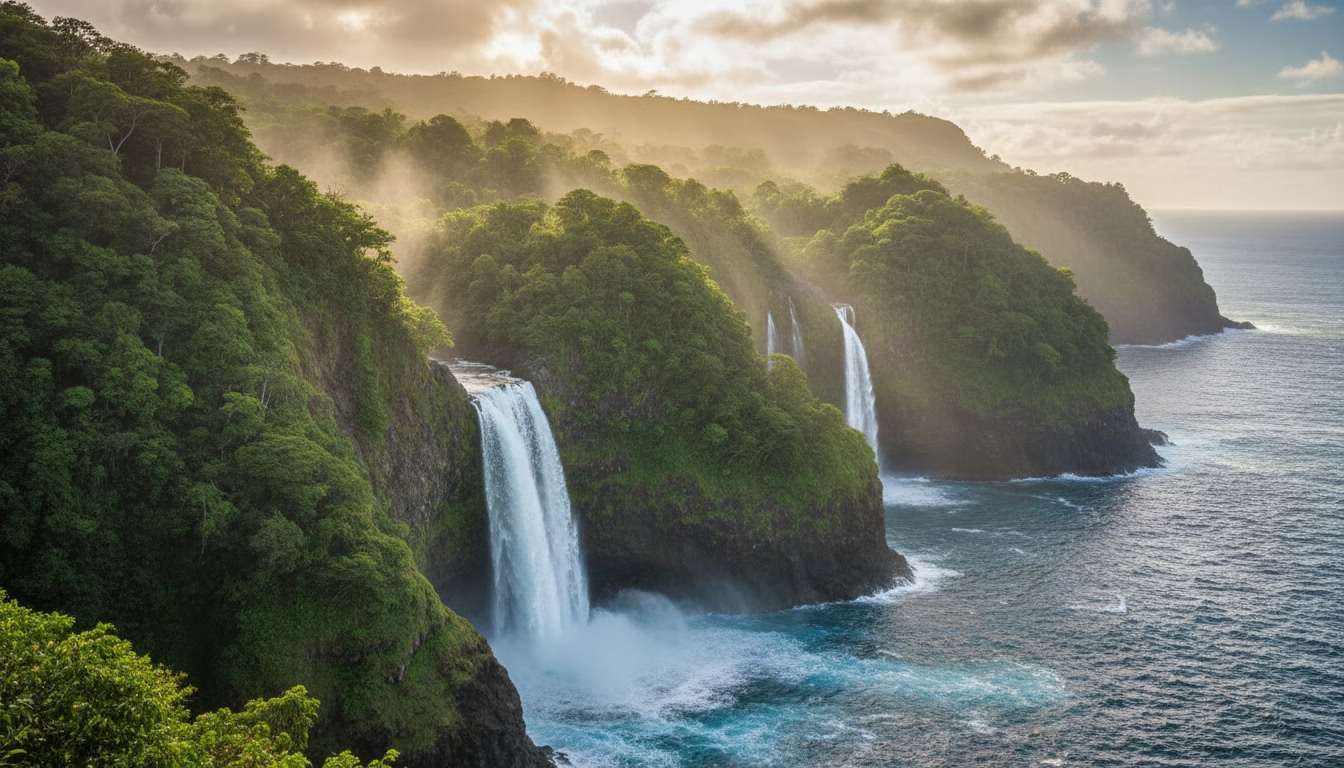
Cocos Island, known in Spanish as Isla del Coco, is one of the most remote and best-protected territories on Earth. A national park since 1978 and UNESCO World Heritage Site since 1997, this volcanic island in the Pacific draws a select few divers, researchers and adventurers each year. Difficult to access, with extraordinary marine life and pirate legends: Cocos Island combines everything a discerning traveller dreams of.
| Criterion | Detail |
|---|---|
| Location | 550 km off the Pacific coast of Costa Rica (Puntarenas province) |
| Land area | 23.85 km² |
| Status | National Park (1978) + UNESCO World Heritage Site (1997) |
| Access | Diving cruise departing from Puntarenas (36 to 40 hours crossing) |
| Recommended duration | 8 to 12 nights (liveaboard cruise) |
| Average budget | $4,500 to $9,000 per person (all-inclusive cruise + park fees) |
| Best diving period | June to December (hammerhead sharks, manta rays) |
| Required diving level | Open Water + minimum 30 dives, advanced level recommended |
| Flagship species | Scalloped hammerhead sharks, manta rays, dolphins, humpback whales |
| Major dive sites | Bajo Alcyone, Manuelita, Dos Amigos Grande, Chatham |
Where Is Cocos Island and Why Does It Fascinate So Many People?
An Isolated Pacific Island 550 km from the Costa Rican Coast
Cocos Island lies approximately 550 km south-west of Costa Rica’s Pacific coast, in the tropical eastern Pacific Ocean. It falls administratively under the province of Puntarenas. At 23.85 km², it remains tiny against the vast expanse of ocean surrounding it. Its precise geographical position, at 5°31′ north latitude and 87°04′ west longitude, makes it a convergence point for several major ocean currents.
This location is no accident. Cocos Island is the first contact point of the North Equatorial Counter-Current, generating upwellings of cold, nutrient-rich water. This phenomenon attracts exceptional concentrations of marine life, from plankton to large pelagics. It is precisely this mechanism that has built the worldwide reputation of Cocos Island.
A Mythical Territory Between Pristine Nature, Pirates and Treasure Island
Discovered in 1526 by Spanish navigator Juan Cabezas, Cocos Island first appeared on a map in 1542 under the name “Ysle de Coques”. For centuries, pirates, whalers and privateers stopped here to replenish fresh water supplies. Legend has it that hundreds of tonnes of gold looted from Spanish galleons lie buried on the island.
This reputation as a treasure island is said to have inspired Robert Louis Stevenson for his eponymous novel, and some claim Michael Crichton drew on it for Jurassic Park. Annexed by Costa Rica in 1832, the island today is inhabited solely by rotating park rangers. No treasure has ever been found — but the real bounty lies beneath the surface of the water.
Why Is Cocos Island Classified as a National Park and UNESCO Site?
A Unique Ecosystem Protected Since 1978
Costa Rica classified Cocos Island as a national park as early as 1978, by executive decree. In 1997, UNESCO granted it World Heritage status, under criteria (ix) and (x) recognising exceptional evolutionary biological processes and remarkable biodiversity. In 2002, the marine protected area was extended to 22.2 km around the island, bringing the park’s total area to nearly 200,000 hectares.
The island has also been recognised as a Ramsar site since 1998, strengthening its protection as a wetland of international importance. It alone represents nearly 50% of Costa Rica’s marine endemism. All extraction of marine resources and any commercial or industrial activity is strictly prohibited there.
Conservation Challenges Faced with Illegal Fishing
Despite its protected status, Cocos Island National Park remains exposed to illegal fishing. Vessels from Ecuador and Central America regularly venture into the protected zone to catch sharks — mainly for their fins — and tuna. In 2023, eighteen marine conservation organisations alerted international authorities about the persistence of this threat.
Park rangers now use an advanced radar system to monitor approaches. Partners such as the Sea Shepherd Conservation Society have helped strengthen maritime presence. Resources remain insufficient given the vast area to be monitored, however, and funding remains a central challenge for the long-term survival of this ecosystem.
What Is the Geography of Cocos Island?
Volcanic Relief, Cliffs, Waterfalls and Tropical Rainforest
Cocos Island is of volcanic origin, formed approximately 2.5 million years ago. Its terrain is particularly rugged: cliffs reaching 55 metres in height, enclosed bays, sea caves and a highest point, Cerro Iglesias at 634 metres above sea level. The topography generates a multitude of waterfalls — nearly two hundred have been counted — some of which plunge directly into the sea.
Vegetation covers the island from the base of the coasts to the summit. Below 500 metres, tropical rainforest dominates; above that, a cloud forest takes over. This altitudinal gradient creates varied microclimates, ideal for a dense and diverse flora. The island is the only one in the tropical eastern Pacific to harbour a full tropical rainforest.
Climate, Seasons and Weather Conditions to Know Before Departing
The climate of Cocos Island is tropical and humid, with heavy rainfall for approximately nine months of the year — from May to January. The driest months run from February to April. Temperatures remain stable, around 25 to 28°C year-round. Humidity is almost constant, regardless of the time of visit.
At sea, conditions vary considerably depending on the season. From June to December, currents are stronger and the surface is often rough during the crossing from Puntarenas. Underwater visibility can drop to 10 metres during plankton blooms. From December to May, the waters are calmer and visibility can reach 30 metres — an important factor to consider when planning your trip.
What Biodiversity Can Be Observed on Cocos Island?
Endemic Terrestrial Fauna: Birds, Reptiles and Amphibians
The terrestrial fauna of Cocos Island includes around 85 bird species, three of which are strictly endemic: the Cocos finch (Pinaroloxias inornata), the Cocos flycatcher (Nesotriccus ridgwayi) and the Cocos cuckoo (Coccyzus ferrugineus). These species exist nowhere else on Earth. Boobies, frigatebirds and terns nest in dense colonies on the cliffs.
Among reptiles, two species are endemic: a lizard and a salamander unique to the island. A few species of frogs are also present. The island has no naturally occurring terrestrial mammals — the five species present (wild boar, rat, goat, cat, white-tailed deer) were all introduced by humans and are actively managed to limit their impact on native ecosystems.
Exceptional Marine Fauna: Hammerhead Sharks, Manta Rays, Dolphins and Whales
It is beneath the surface that Cocos Island truly reveals its extraordinary character. The park’s waters harbour more than 300 fish species, 600 marine mollusc species and 45 endemic marine species. Concentrations of scalloped hammerhead sharks (Sphyrna lewini), an endangered species, are among the largest in the world.
The list of observable species is staggering: whale sharks, tiger sharks, Galápagos sharks, silky sharks, giant manta rays, marbled rays, eagle rays, long-beaked dolphins, humpback whales, marlins, sailfish and tuna. Orcas have even been spotted here on occasion. The convergence of equatorial currents makes it a biological crossroads with no equivalent in the eastern Pacific.
Island Flora and Remarkable Plant Species
Cocos Island records approximately 235 vascular plant species, about sixty of which are endemic. The forest is dominated by giant moss-covered trees, bromeliads, tree ferns and palms. The latter probably contributed to the island’s name, as coconut palms were introduced in the 17th century.
Non-vascular flora adds 48 further species. In total, 15% of plant species present are endemic, a testament to the island’s prolonged isolation and the evolutionary processes that developed there without continental influence. Coffee (Coffea arabica) and guava, introduced by former settlers, have invaded some areas and today constitute a threat to native vegetation.
Why Is Cocos Island a Mythical Diving Destination?
Rare Concentrations of Pelagics Among the Most Impressive in the World
Jacques Cousteau called Cocos Island “the most beautiful island in the world”. This judgement, made by one of the most experienced divers of the 20th century, is not an overstatement. Cocos Island is regularly ranked among the world’s top ten diving spots by organisations such as PADI and specialist media including CNN Travel.
What sets Cocos apart from other diving destinations is the density and consistency of pelagic encounters. Hundreds of hammerhead sharks can form tight schools just metres from divers. Cleaning stations simultaneously attract multiple species of rays and sharks. This spectacle, difficult to match elsewhere, justifies the 36-hour crossing in itself.
The Best Dive Sites: Bajo Alcyone, Manuelita, Dos Amigos and Chatham
Bajo Alcyone is the most iconic site at Cocos Island. This 600-metre-long seamount concentrates massive schools of hammerhead sharks, manta rays and sailfish. Dives here go down to 25–30 metres in sustained currents. Manuelita Garden, more sheltered, allows encounters with marbled rays, white-tip sharks and creole wrasse in a dense coral garden.
Dos Amigos Grande is distinguished by a natural arch 13 metres high, permanently inhabited by hammerhead sharks and snappers. The Chatham site, in the bay of the same name, offers a great variety of frogfish, moray eels and lobsters. In total, around twenty dive sites are accessible around the island, each with its own bathymetric character.
What Level of Diver Is Cocos Island Suited For?
Cocos Island is not a discovery destination. Most sites involve deep dives — between 20 and 40 metres — in strong and sometimes unpredictable currents. Operators generally require a minimum of 30 logged dives and an Advanced Open Water PADI certification (or equivalent). Some sites are reserved for highly experienced divers.
A few more sheltered sites suit intermediate-level divers, and local guides adapt itineraries to current conditions. Bringing your dive logbook is mandatory — guides will check your experience before authorising certain dives. Nitrox is available on board, and some operators offer training during the crossing.
How to Get to Cocos Island?
Departing from San José then Boarding at Puntarenas
The logistical starting point is San José, Costa Rica’s capital. Most operators offer a minibus transfer from a hotel in the capital to the port of Puntarenas, a journey of about two hours towards the Pacific coast. It is essential to arrive in San José at least one day before boarding, given airline schedules and potential delays.
Boarding at Puntarenas depends on tidal schedules. Boats generally depart in the late afternoon or evening. Spending the previous night in a San José hotel is recommended, and return flights should be booked no earlier than 12:30 pm on the day of arrival back at port — disembarkation takes place early in the morning after the cruise returns.
A 36 to 40-Hour Boat Crossing: What to Prepare
The crossing to Cocos Island takes between 36 and 40 hours depending on weather conditions and the vessel. This is a long sea passage, sometimes challenging if winds are strong. Taking preventive motion sickness medication from departure is strongly advised — doctors on board can provide some, but it is better to bring your own. The crossing is also preparation time: safety briefings, assembling equipment, first evaluation dive.
The vessels used — such as those in the Aggressor fleet, the Sea Hunter, Undersea Hunter or Nautilus — are motor yachts of 30 to 40 metres, equipped with stabilisers. Cabins are individual with en-suite bathrooms. Some also offer a submersible capable of descending to over 300 metres depth.
Can You Visit the Island Without a Diving Cruise?
No. Cocos Island has no public transport connections and no accommodation infrastructure on land. The only legal way to stay near the island is to board an authorised liveaboard cruise. Rotating park rangers are the only permanent residents of Cocos Island, and visitors cannot spend the night there.
Non-divers can board some cruises, however. Park entrance fees are slightly lower for them. Activities offered from the boat include guided hikes ashore, birdwatching and cetacean observation from the deck, and scientific presentations delivered by on-board guides or researchers.
What Budget to Plan for a Trip to Cocos Island?
Diving Cruise Prices, Included Services and Comfort Levels
The price of a diving cruise to Cocos Island ranges from $4,500 to $9,000 per person depending on the vessel, duration and cabin category, for itineraries of 8 to 12 nights. These rates generally include meals, dives (15 to 27 depending on duration), cabin accommodation, and the transfer from San José. They do not include flights, tips or park fees.
National park fees amount to approximately $70 per day spent in the marine protected area, totalling around $490 for 7 diving days. A mandatory emergency medical evacuation fee of approximately $30 is also required. Diving equipment can be rented on board, but bringing your own remains preferable for comfort and adaptation to conditions.
When to Book and How Far in Advance?
Cruises to Cocos Island are in high demand, and places are sometimes filled twelve to eighteen months in advance for peak season departures (June–October). It is advisable to contact operators at least a year before your desired date, especially if you want specific dates or a superior cabin.
A deposit of around $700 to $1,000 is generally required to confirm a reservation. The balance is due 60 days before departure. Some operators offer instalment payment plans. Last-minute places are rare — but they do exist, generally in the low season or following cancellations.
What to Do on Cocos Island Beyond Diving?
Guided Hiking, Viewpoints and Forest Discovery
Shore visits are permitted in designated areas, under the mandatory supervision of park rangers or cruise guides. An information centre and several marked trails allow visitors to venture into the tropical rainforest and reach panoramic viewpoints over the bays and cliffs. The hike up to the rangers’ station offers one of the finest panoramas on the island.
The forest itself is worth the visit: giant trees covered in bromeliads, accessible waterfalls, dense and almost entirely intact jungle atmosphere. Visitors must strictly respect the authorised trails, as one third of the island’s territory remains off-limits to the public for conservation reasons.
Nature Observation and the Scientific Interest of the Site
Cocos Island is an open-air natural laboratory. Scientific expeditions return regularly to study evolutionary processes, shark behaviour and current dynamics. Some cruises embark researchers, which considerably enriches the passenger experience with lectures and on-dive shark-tagging sessions.
Birdwatching from the boat’s deck is an activity in its own right. Frigatebirds, blue-footed boobies, Nazca boobies and red-billed tropicbirds nest on the cliffs and constantly circle the anchorage. Humpback whales are regularly spotted at the surface, particularly between August and November during their migrations.
When to Go to Cocos Island?
Best Period for Diving and Underwater Visibility
For lovers of large pelagics — generally the primary reason for the trip — the period from June to December is the most favourable. It is during the wet season that plankton blooms attract massive schools of scalloped hammerhead sharks, giant manta rays and whale sharks. Encounters are statistically more frequent and more spectacular.
The dry season, from December to May, offers better underwater visibility — up to 30 metres in optimal conditions — and a more comfortable sea crossing. Currents are less violent, which suits less experienced divers better. Manta rays and white-tip sharks are present year-round, but hammerhead concentrations are lower.
Differences Between Wet Season, Sea, Observable Fauna and Navigation Comfort
In the wet season (June–December), expect frequent rain, sometimes rough seas and reduced surface visibility. The crossing can be demanding. In return, marine biodiversity is at its peak and hammerhead shark schools can reach several hundred individuals at a single site. September is often cited as the most productive month for pelagics.
In the dry season (December–May), the water surface is calmer, the crossing more pleasant, and underwater visibility higher. White-tip sharks are more active at night (even though night dives are not permitted at Cocos), and green turtles frequent shallow waters. This is also the period when dolphins are most active around the boat at anchor.
FAQ on Cocos Island
Is Cocos Island Accessible to All Travellers?
No, and this is precisely what makes it such a well-preserved destination. Cocos Island has no tourist infrastructure on land: no hotel, no restaurant, no public shuttle. The only way to access it is to board an authorised liveaboard cruise, departing from Puntarenas. Non-diving visitors can board some vessels, but the journey remains physically demanding.
You will also need a valid passport and insurance covering diving accidents (DAN or equivalent). Citizens of the United Kingdom, United States, Canada and most European countries do not need a visa to enter Costa Rica for stays under 90 days. A return ticket and sufficient funds may be required upon entry to the country.
How Many Days Should You Plan for a Cruise to Cocos Island?
Standard cruises last between 8 and 12 nights. On a 10-night itinerary, you will spend approximately two days at sea (return trip) and seven effective diving days around the island. 12-night cruises offer an additional diving day, which underwater photographers particularly appreciate for maximising opportunities at the best sites.
Adding one night in San José before boarding and another after return is strongly recommended, especially if your international flight arrives or departs early in the morning. In total, plan for between 10 and 14 days of travel, flights included, for a Cocos Island experience under good logistical conditions.
Why Is Cocos Island Considered One of the World’s Greatest Dive Spots?
The answer can be summed up in a few figures: over 300 fish species, 45 endemic marine species, and hammerhead shark concentrations among the largest recorded on the planet. But beyond the statistics, it is the overall experience that leaves a lasting impression: the sensation of diving in a world barely touched by humanity, far from any coast, in waters where large predators still roam freely.
PADI regularly ranks Cocos Island among its top ten priority diving destinations. Jacques Cousteau named it “the most beautiful island in the world” in 1994. This consensus, rare in the diving world, is explained by the consistency of pelagic encounters and the integrity of an ecosystem almost spared from human pressure.
What Is the Difference Between a Nature Trip, Scientific Expedition and Diving Cruise to Cocos Island?
A standard diving cruise is organised by commercial operators such as Aggressor, Nautilus or Undersea Hunter. It targets divers wishing to maximise the number of dives and encounters with marine megafauna. A scientific expedition, such as those organised by the Turtle Island Restoration Network, embarks researchers and volunteers for shark-tagging, species surveys or sea turtle migration studies.
A pure nature trip — without diving — remains possible on certain vessels, as an observer passenger. Activities then focus on shore hikes, zodiac excursions to observe whales and dolphins, and scientific lectures on board. This format remains marginal, as the vast majority of travellers who make the journey to Cocos Island come primarily to dive in this Pacific sanctuary.