
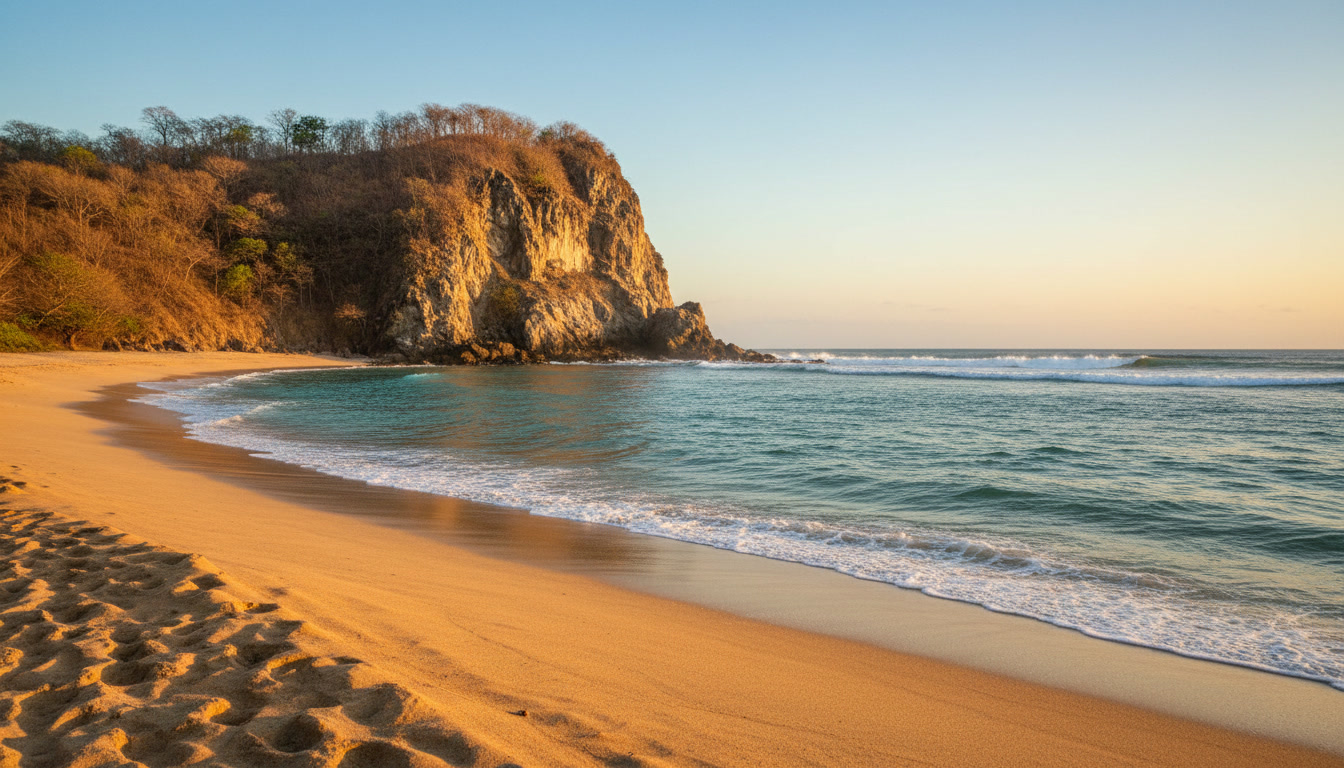
Guanacaste brings together everything that has made Costa Rica famous: Pacific beaches with white or golden sand, active volcanoes, wildlife-rich national parks, and an authentic sabanero (cowboy) culture unique to this province. Liberia, the provincial capital, serves as the natural base for exploring this vast region in the north-west. From the Daniel Oduber international airport, the first beaches are less than 30 minutes away. National parks lie within an hour’s drive. Here is a complete guide to planning your stay in the Guanacaste region of Costa Rica.
| Destination | Distance from Liberia | Type | Best for | Best season |
|---|---|---|---|---|
| Playa Hermosa | 40 km / 50 min | Quiet beach | Families, diving | Dec–Apr |
| Playa del Coco | 35 km / 40 min | Lively village | Nightlife, water sports | Dec–Apr |
| Playa Flamingo | 75 km / 1h30 | Upscale beach | Luxury stays | Dec–Apr |
| Tamarindo | 80 km / 1h30 | Surf village | Surfers, backpackers | Jul–Apr |
| Playa Avellana | 100 km / 1h45 | Surf spot | Experienced surfers | Jul–Nov |
| Rincón de la Vieja | 25 km / 40 min | Volcanic park | Hikers, adventurers | Dec–Apr |
| Palo Verde | 60 km / 1h | Wetland park | Birdwatchers, nature lovers | Jan–Apr |
| Llanos de Cortés waterfall | 25 km / 30 min | Waterfall | All visitors | Year-round |
Guanacaste and Liberia: Gateway to North-West Costa Rica
Where Guanacaste and Liberia are located in Costa Rica
Guanacaste province covers the north-west corner of Costa Rica, along the Pacific coast. Liberia, its capital, sits roughly 230 kilometres from San José, about four to five hours by road depending on traffic. The city stands at the intersection of the Pan-American Highway (Route 1) and Route 21, which leads down to the coast. That strategic crossroads makes it the logistical hub for the entire region.
Why Liberia is the tourism capital of Guanacaste
Liberia is also known as la Ciudad Blanca, the White City, for its lime-washed adobe facades and colonial streets. It is the second-largest city in Costa Rica and its international airport (code LIR) welcomed nearly 1.9 million passengers in 2024. Nearby options are plentiful: volcanoes, national parks, beaches within an hour’s drive, and an authentic ganadero (cattle ranching) culture that sets it apart from the bustle of the coastal resorts.
Climate, landscapes and regional features
Guanacaste is the driest region in Costa Rica. The dry season runs from December to April, with near-constant sunshine and temperatures between 30 and 35 °C. The green season (May to November) brings afternoon rains, but the landscape transforms and there are far fewer tourists. The scenery shifts between savannahs, tropical dry forests and volcanic terrain, a rare diversity for a single province.
Things to Do in Guanacaste Around Liberia: Activities and Experiences
Exploring Rincón de la Vieja volcano and national park
Just 25 km from Liberia, Rincón de la Vieja national park is the region’s volcanic playground. The Las Pailas sector features a 3.5 km loop around boiling mud pools, fumaroles and geysers. For more energetic visitors, the trail to La Cangreja waterfall is a 10 km return hike through tropical dry forest. Entrance costs around 17 USD for adult foreigners, card payment only. The park closes on Mondays.
Wildlife watching at Palo Verde national park
Palo Verde park lies about an hour south of Liberia, along the Tempisque river. It is one of the most important wetlands in Central America and a major refuge for migratory birds. The boat safari on the Tempisque is the highlight: in one to two hours, you can spot crocodiles, iguanas, howler monkeys and hundreds of bird species. January to April is the best window, when waterfowl concentrate around the remaining water sources.
Discovering the caves of Barra Honda national park
Barra Honda park sits about 80 km from Liberia, roughly 1h30 by road towards the Nicoya peninsula. Its distinctive feature is a network of 42 limestone caves, of which only 19 have been explored. The most visited, Terciopelo cave, descends 60 metres below ground. Visits are compulsory with a local guide, with appropriate equipment required. Hiking trails are also available for those who prefer to stay above ground.
Swimming at Llanos de Cortés waterfall
Llanos de Cortés waterfall lies just 25–30 minutes south of Liberia, near the town of Bagaces. It measures roughly 12 metres high and 15 metres wide, falling into a natural pool of crystal-clear water. Access is easy, the site is perfect for a half-day trip, and the entry fee is very affordable (a few dollars). It is one of the most accessible waterfalls in Costa Rica, set amid lush tropical vegetation.
The Most Beautiful Beaches in Guanacaste Near Liberia
Playa Hermosa: a quiet beach close to the city
Just 40 km from Liberia, Playa Hermosa lives up to its name. The beach stretches for several hundred metres of pale brown sand, with shallow water extending a long distance from shore, ideal for families. The atmosphere is calm and infrastructure remains modest. A handful of restaurants and small hotels dot the village. For water sports, agencies in nearby Playa del Coco cover this stretch of coast as well.
Playa Flamingo: pale sand and sunset views
Playa Flamingo sits about one hour from Liberia airport. The sand is a striking milky white, and the water, fed by the Potrero and Brasilito bays, is exceptionally clear. Flamingo marina is the departure point for diving trips to the Catalinas islands, where you can encounter manta rays and reef sharks. The atmosphere is upscale: few shops, many private villas, and a predominantly international crowd.
Playa Tamarindo: surfing and a lively scene
Tamarindo is the liveliest resort in the Guanacaste Tamarindo Costa Rica area. Located 80 km from Liberia via Route 21, this village combines surf schools, restaurants from every country, bars open until 2 am, and waves suitable for beginners and experienced surfers alike. The beach is long and well exposed to the Pacific. Tamarindo beach Guanacaste attracts both families and solo travellers looking for a central base in the region.
Playa del Coco: nightlife and water sports
Playa del Coco is the closest beach to Liberia, just 35 km away. It is also one of the liveliest on the northern Pacific: bars, restaurants, nightclubs, and a busy port offering an extensive range of water activities. Divers know this area well: the dive sites of the Gulf of Papagayo are among the most popular in Costa Rica, with reasonable visibility year-round and water temperatures around 27–28 °C.
Playa Avellana: a well-known surf spot
Playa Avellana lies about 100 km south of Liberia, close to Tamarindo. Nicknamed little Hawaii by surfers, the beach produces waves that can exceed five metres in the right season. It is a spot for experienced surfers, with little infrastructure but an authentic, relaxed atmosphere. The swell season (July to November) produces the best conditions, and the restaurant Lola has become a local landmark on the beach.
Water Activities and Nature on the Pacific Coast
Surfing, diving and snorkelling in the waters of Guanacaste
The northern Pacific coast of Costa Rica offers a wide range of water activities. Beginners learn to surf in Tamarindo, while experienced surfers head to Avellana or Playa Naranjo. Diving is organised from Playa del Coco or Flamingo marina, heading to the Catalinas islands or Papagayo bay. In August and September, humpback whales visit these waters, a rare opportunity to combine with a snorkelling trip.
Kayaking and boat trips along the coast
Sea kayaking is available from several beaches in the Gulf of Papagayo, with options to follow the mangroves or reach secluded coves. Sunset catamaran trips depart mainly from Playa del Coco, Flamingo or Tamarindo, for half-day outings at around 60–90 USD. Snorkelling boat tours to the Catalinas islands remain one of the most popular excursions in the region, with rich underwater life and little current.
Turtle and bird watching
Las Baulas national park, near Playa Grande (next to Tamarindo), hosts leatherback sea turtles from November to March — the world’s largest marine turtles. Visits take place at night in small groups with a licensed guide. For birdwatching, Palo Verde remains the benchmark, but Rincón de la Vieja also harbours remarkable birdlife, including toucans, scarlet macaws and quetzals at higher elevations.
How to Get to Liberia and the Guanacaste Region
Arriving via Liberia international airport
Daniel Oduber Quirós airport (code LIR), located 12 km from Liberia, is the most direct entry point for the region. It is served by direct flights from Miami, Los Angeles, Toronto, New York, Seattle and other North American cities, with United, American and Delta as the main carriers. European travellers generally connect through Miami or New York. The terminal is compact and immigration clears faster than at San José.
Renting a car to explore the region
A hire car remains the most practical way to explore Guanacaste. Rental desks are at LIR airport, with rates starting from 40 to 80 USD per day depending on vehicle type. A standard car is sufficient for the main beaches (Coco, Hermosa, Tamarindo). A high-clearance 4×4 is recommended for tracks leading to certain national parks and during the rainy season. Book in advance during high season (December–April).
Travelling by bus or private driver
Public buses connect San José to Liberia several times a day from the Pulmitan terminal. The journey takes around 4 hours for roughly 8–11 USD. From Liberia, local buses continue to coastal villages (Coco, Flamingo, Tamarindo). Private shuttles offer San José–Liberia or San José–Tamarindo trips for 25 to 50 USD per person, with hotel pick-up included — more comfortable but less flexible.
Taking the ferry to the Nicoya peninsula
To reach the Nicoya peninsula, the ferry from Puntarenas is the most enjoyable option. The crossing takes about one hour, with boats running from 5 am to 8 pm. From Liberia, allow two hours by road to reach Puntarenas. This option is particularly useful if you want to combine Guanacaste with destinations such as Montezuma, Santa Teresa or Malpais, located in the southern part of the peninsula and difficult to reach by land from the north.
Tips for Visiting Guanacaste and Liberia
Best time to travel to the region
The dry season, from December to April, is the most recommended period for beach activities and outdoor excursions. Temperatures reach 30 to 35 °C, skies are clear and roads are in good condition. The green season (May to November) offers lusher scenery, often lower accommodation rates and quieter beaches. Rain typically falls in the afternoon, leaving mornings free for excursions.
How many days to plan for exploring Guanacaste
A minimum of 7 to 10 days allows you to cover the main sites at a relaxed pace. With one week, you can alternate two or three days at the coast (Tamarindo or Gulf of Papagayo), a day at Rincón de la Vieja, a trip to Llanos de Cortés, and a visit to Liberia for its local culture. With ten days, add Palo Verde, Barra Honda and some secondary beaches such as Avellana or Conchal.
Accommodation and where to base yourself
Liberia works well for a transit night or if you plan to focus on national parks. Central hotels (Best Western El Sitio, Boyeros Hotel) offer rooms between 40 and 80 USD. Tamarindo and Playa del Coco provide the widest range of options: hostels from 15 USD, mid-range hotels at 60–100 USD, and a number of boutique hotels. For luxury, the Gulf of Papagayo (Andaz, Four Seasons) remains the reference on the northern Pacific coast.
FAQ about Guanacaste and Liberia in Costa Rica
Is Liberia worth visiting?
Yes, Liberia deserves at least half a day. Calle Real, the Ermita de la Agonía church (1865) and the Museo de Guanacaste, housed in the former military barracks, give a tangible sense of the province’s history. The city is also the only place in the region where you can truly experience sabanero culture on a daily basis, with its markets, civic festivals in February, and a pace of life entirely untouched by tourism.
What are the most beautiful beaches close to Liberia?
The most accessible beaches from Guanacaste Liberia Costa Rica are Playa Hermosa and Playa del Coco, both within 50 km. Playa Flamingo, at 75 km, boasts the whitest sand on the northern coast. Tamarindo, at 80 km, combines village life with quality surfing. For those seeking quieter spots, Playa Avellana or Playa Conchal are worth the detour, an hour and a half from Liberia with far fewer visitors.
What is there to do in Guanacaste beyond the beaches?
The region has much to offer beyond the coast. Rincón de la Vieja park provides hiking, mud baths and hot springs. Palo Verde surprises with its bird concentrations. Barra Honda offers caving. Llanos de Cortés is a half-day waterfall adventure. Local haciendas also organise horse riding, river tubing and zip-line activities, particularly around the Rincón de la Vieja massif (Hacienda Guachipelin, Buena Vista).
How do you get to Guanacaste from San José?
Three main options are available. By bus, Transporte Inteligente de Guanacaste connects San José to Liberia in around 4 hours for under 12 USD. By car, allow 4 to 5 hours via the Pan-American Highway (Route 1). By plane, a domestic flight from San José (SANSA or Costa Rica Green Airways) takes 50 minutes for 100 to 200 USD depending on the season. A shared shuttle, at 25 to 50 USD, is the best comfort-price compromise for reaching coastal destinations directly.