
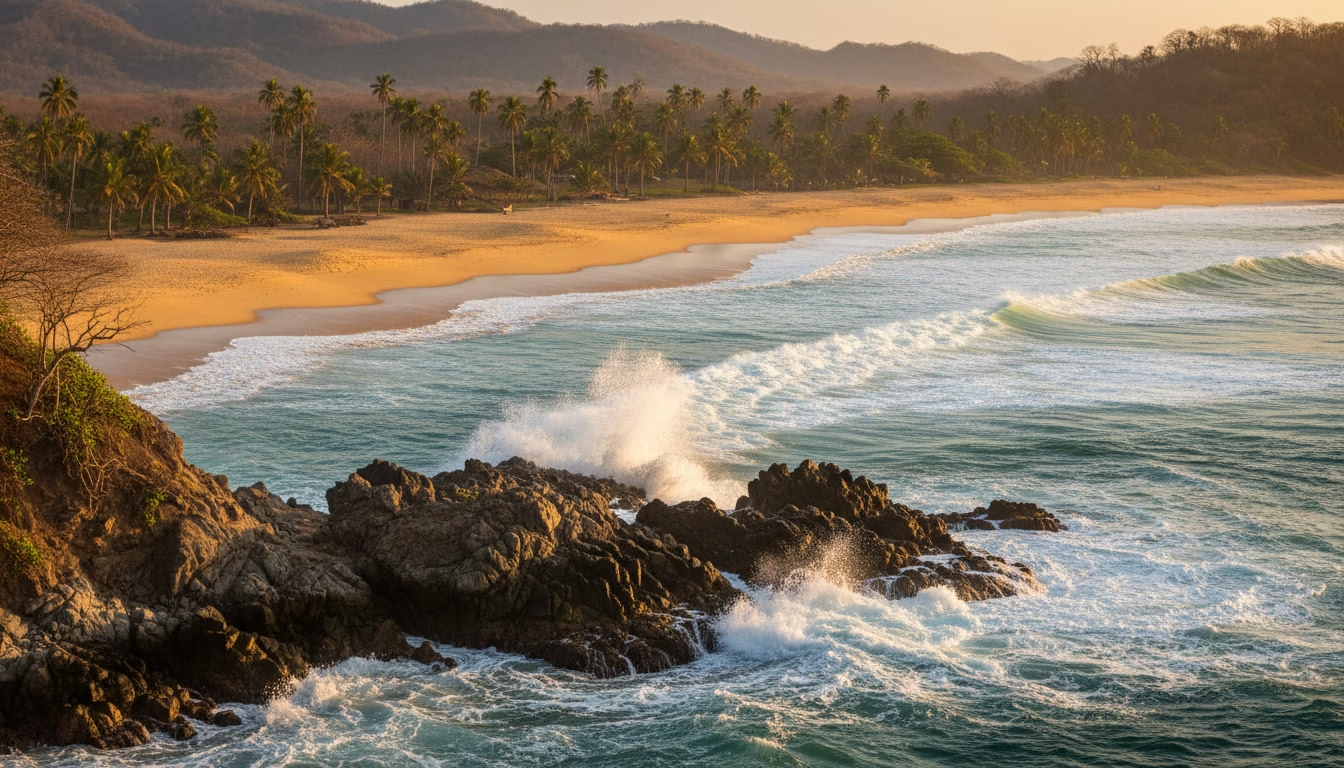
The Guanacaste province occupies the north-west of Costa Rica, along the Pacific coast. This territory of approximately 10,140 km² concentrates an exceptional diversity of landscapes, experiences and cultures that sums up the best of what the country has to offer. From white sandy beaches to active volcanic craters, via tropical dry forests unique in Central America, Guanacaste CR is a destination in its own right. Here is everything you need to know before heading there.
| Trip type | Recommended area | Best period | Suggested duration | Highlight |
|---|---|---|---|---|
| Beach & surf | Tamarindo, Nosara, Playa Grande | Dec. – April (dry season) | 5 to 7 days | Consistent waves, surf schools |
| Nature & volcanoes | Rincón de la Vieja, Santa Rosa | Dec. – April | 3 to 5 days | Hot springs, wildlife |
| Sea turtles | Playa Grande, Las Baulas | Sept. – Nov. (nesting) | 2 to 3 days | Giant leatherback turtles |
| Culture & history | Liberia, Nicoya, Santa Cruz | Year-round | 2 to 3 days | Colonial towns, sabaneros |
| Yoga & wellness | Nosara, Sámara | Year-round | 5 to 10 days | Retreats, preserved beaches |
| Diving & snorkelling | Playa Flamingo, Sámara | Dec. – April | 3 to 5 days | Excellent visibility, rich seabeds |
Where is the Guanacaste Province in Costa Rica?
Geographical location and characteristics of the territory
The Guanacaste province Costa Rica sits in the north-western corner of the country, bordered to the north by Nicaragua, to the west by the Pacific Ocean and to the east by the mountains of the Guanacaste Cordillera. Its administrative capital is Liberia, nicknamed “la ciudad blanca” for its whitewashed colonial buildings. The province covers around 10,140 km² and is divided into eleven cantons, each with its own identity.
Climate, landscapes and biodiversity of the region
The Guanacaste climate is one of the driest in Costa Rica. During the dry season, from December to April, sunshine dominates with temperatures reaching 35 °C. The rainy season, from May to November, transforms the hills into green carpets. The region holds over 200 km of coastline, active volcanoes, wetlands, dry forests and plains, creating an exceptional mosaic of biotopes.
Why Visit Guanacaste Province?
A region between Pacific beaches, volcanoes and tropical forests
What strikes you immediately about costa rica guanacaste is the density of contrasts. You can spend a morning hiking around a steaming volcanic crater, have lunch in a cowboy village and end the day on a deserted beach. Few destinations in the world offer this variety in such a compact space. National parks cover a significant part of the territory and protect ecosystems found nowhere else in Central America.
A major destination for tourism in Costa Rica
Guanacaste today concentrates a significant share of Costa Rican tourism. Liberia Airport (code LIR), the country’s second airport, welcomes direct flights from the United States, Canada and Europe. Beach resorts such as Tamarindo or the Papagayo Peninsula attract visitors from all over the world, while villages like Sámara or Nosara retain a decidedly more local atmosphere. The province has solid tourist infrastructure at every budget level.
Local culture and the “Pura Vida” philosophy
Guanacaste has a distinct cultural identity, inherited from the fusion between indigenous Chorotega traditions and Spanish colonial influence. The “Pura Vida” philosophy, this Costa Rican mantra that translates roughly as “enjoy life”, takes a concrete form here: the inhabitants live in tune with nature, far from any unnecessary agitation. This region is also listed as one of the world’s Blue Zones, where the population displays remarkable longevity and well-being.
The Most Beautiful National Parks in Guanacaste
Rincón de la Vieja National Park and its volcanic landscapes
Rincón de la Vieja National Park is probably the most spectacular in the region. It houses a still-active volcano with nine craters, fumaroles, pools of boiling mud and natural hot springs. Two main trails allow exploration: Las Pailas for surface volcanic phenomena, and the more demanding Sendero al Cráter to reach the heights. La Cangreja waterfall, with its turquoise pool, is one of the highlights of the park.
Santa Rosa National Park and the tropical dry forest
Santa Rosa National Park protects the largest area of tropical dry forest in Central America, a rare and fragile ecosystem. It also contains several sea turtle nesting beaches, including Nancite, accessible on foot only. The historic site of La Casona, scene of an emblematic 1856 battle against North American mercenaries, adds a memorial dimension to the park. Entrance costs around 15 USD for foreign visitors.
Barra Honda National Park and its spectacular caves
Barra Honda Park is the only place in Costa Rica to practise speleology. Located between Nicoya and the Tempisque river, it has around 40 limestone caves carved over 70 million years, some descending more than 200 metres deep. The Terciopelo cave is the most accessible for visitors. You will find blind fish, bats and remarkable formations of stalactites and stalagmites. Abseiling is required for some of the caves.
Marino Las Baulas National Park and sea turtles
Marino Las Baulas Park protects one of the world’s most important nesting beaches for the leatherback turtle, the largest of all sea turtles. Playa Grande is the park’s central beach, adjacent to Tamarindo. From September to November, females come to lay their eggs at night, supervised by accredited guides. Night visits are strictly controlled to avoid disturbing the animals. Book well in advance during the nesting season.
The Most Beautiful Beaches in Guanacaste
Playa Tamarindo: surf, restaurants and nightlife
Tamarindo beach Guanacaste is the best-known and most lively beach in the province. This seaside village welcomes surfers of all levels thanks to regular waves and several well-equipped surf schools. The seafront concentrates quality restaurants, shops and bars active into the evening. Tamarindo is accessible from Liberia airport in around 1 hour 15 minutes by road. For travellers looking to combine surfing, comfort and social life, it is the most practical base in Guanacaste.
Playa Sámara: an ideal bay for swimming
Playa Sámara is protected by a natural reef that breaks the waves and makes the waters particularly calm. It is one of the few beaches in Guanacaste suitable for families with young children. The village maintains a relaxed atmosphere despite the tourist presence. You can find sea kayaking lessons, catamaran outings and a few good seafood restaurants. Sámara is located about 2.5 hours by road from Liberia.
Nosara and Playa Guiones: surf and yoga by the Pacific
Nosara is a destination apart in the Guanacaste region of Costa Rica. Playa Guiones offers several kilometres of brown sand bordered by dense forest, with consistently quality waves throughout the year. The community that has developed around Nosara mixes experienced surfers, yogis and eco-travellers. Yoga retreats here are numerous and of a high standard. The deliberately preserved village bans illuminated signs and large hotel chains, which helps to maintain an authentic atmosphere.
Playa Conchal, Flamingo and Hermosa: preserved beaches
Playa Conchal takes its name from its unique composition: millions of shells crushed by the waves that give the sand a pinkish hue and a particular texture. Playa Flamingo is renowned for its clear waters, its marina and the quality of its scuba diving activities. Playa Hermosa, further north, offers a more restful setting with several beachfront resorts. These three beaches are located in the northern part of Guanacaste, less than an hour from Liberia.
Essential Activities in Guanacaste Province
Surfing, diving and water sports on the Pacific coast
The Pacific coast of Guanacaste stretches over 200 km and concentrates some of the country’s best surf spots. Tamarindo suits beginners with its gentle waves; Witch’s Rock and Ollie’s Point, accessible by boat only, are reserved for experienced surfers. Scuba diving is excellent off Flamingo and Sámara, where visibility often exceeds 20 metres. Kitesurfing is practised notably at Playa del Coco. Catamaran outings with snorkelling remain the most accessible water activity for everyone.
Hiking in volcanoes, forests and nature parks
The province’s national parks offer a network of trails for all levels. At Rincón de la Vieja, the hike to the active crater takes around 8 hours return from the Las Pailas entrance. The forests of Santa Rosa park can be explored on well-marked trails where you regularly encounter spider monkeys and coatis. The boat safari on the Tempisque river from Palo Verde park, an hour from Liberia, allows you to observe hundreds of bird species from the water.
Wildlife watching: turtles, monkeys and tropical birds
Guanacaste is one of the best regions in Costa Rica for observing wildlife. Four species of monkeys are present: capuchins, spider monkeys, howlers and squirrel monkeys. Green iguanas are common on the beaches. Birdwatching is excellent throughout Palo Verde park, recording over 300 species including jabirus, ospreys and parrots. For sea turtles, the beaches of Las Baulas and Santa Rosa are the most accessible sites.
Discovering waterfalls and natural hot springs
The volcanic activity of Rincón de la Vieja generates several natural hot springs in the surrounding forests. Establishments such as Vandara Hot Springs, located about thirty minutes from Liberia, allow bathing in a managed setting. La Cangreja waterfall inside Rincón de la Vieja park is reached after 2 hours of walking and offers a swim in a turquoise pool. The Celeste river, further towards the Tenorio volcano, is well worth the detour for its uniquely fluorescent colour.
Culture and Traditions of Guanacaste
The sabaneros: Costa Rica’s cowboys
The culture of the sabanero, the Costa Rican cowboy, is deeply rooted in Guanacaste’s identity. These horseback cattle herders still work on the great haciendas of the interior. Their equestrian techniques, traditional songs and embroidered costumes have been inscribed on UNESCO’s Intangible Cultural Heritage list since 2017. The museum dedicated to this culture in Liberia is worth a visit. During the patron saint festivals of various villages, sabanero parades make for an authentic and colourful spectacle.
Towns and villages to discover: Liberia, Nicoya and Santa Cruz
Liberia Guanacaste Costa Rica is the provincial capital, with around 60,000 inhabitants. Its colonial centre, rich in 19th-century whitewashed houses, can be visited on foot in a few hours. Nicoya, further south, is considered the cultural cradle of the province and houses one of the oldest churches in Costa Rica. Santa Cruz, nicknamed “la ciudad folclórica”, is renowned for its marimba festivals and traditional dances that liven up the town throughout the year.
Crafts, history and archaeological sites
The Nicoya peninsula is the historic territory of the Chorotega people, whose polychrome pottery is among the finest in Central America. You can still find craftspeople perpetuating this tradition in villages like Guaitil, about fifteen kilometres from Santa Cruz. The Nosara archaeological site and the pieces displayed at Liberia’s regional museum complete one’s understanding of this pre-Columbian civilisation. The local markets in Nicoya also sell handmade leather goods crafted by sabanero artisans.
When to Visit Guanacaste Province?
Dry season and green season: climate and tourist numbers
The dry season from December to April is the most popular period. The sky is clear, the roads are passable and the beaches are at their best. That said, prices rise significantly in December and during Holy Week, and accommodation must be booked months in advance. The green season, from May to November, offers lower rates, near-empty beaches and lush vegetation. Rain showers generally fall in the early afternoon, leaving mornings free for activities.
Best periods for wildlife watching
For leatherback turtles at Las Baulas park, the optimal window runs from September to November. Olive ridley turtles arrive in masse at Santa Rosa from July to December, sometimes in their tens of thousands during the “arribadas”. Migratory birds are more numerous from November to April in Palo Verde park. The rainy season, despite its apparent discomfort, is often the best period for observing monkeys, reptiles and frogs in the forested parks.
How to Organise Your Trip to Guanacaste
Access via Liberia international airport
Daniel Oduber Quirós Airport (LIR) in Liberia is the natural gateway to Guanacaste. Located about 13 km south-west of the city, it directly serves dozens of North American and Canadian cities. From Europe, Edelweiss Air offers a direct flight from Zurich year-round. Travellers from London or Paris generally connect through Miami, New York or Amsterdam. Once at the airport, the main beaches of Guanacaste are accessible in 30 minutes to 2 hours by road depending on the destination.
Main tourist areas and beach resorts
The coast is organised into several distinct zones. In the north, the Papagayo Peninsula concentrates large high-end all-inclusive resorts. The Tamarindo and Playa Grande area is the most developed, ideal for travellers seeking complete infrastructure. Further south, Nosara and Sámara on the Nicoya peninsula offer a more preserved atmosphere. Renting a 4×4 vehicle is strongly recommended to explore the coast freely, as some roads to remote beaches require off-road driving.
Itinerary ideas for discovering the region
For one week, a good starting point is to spend two nights in Liberia exploring Rincón de la Vieja, then two nights in Tamarindo for surfing and Las Baulas turtles, before finishing with two nights in Nosara or Sámara to unwind. For two weeks, you can add Santa Rosa park, a safari on the Tempisque from Palo Verde and a stay at Playa Conchal. Shared shuttle transfers between major destinations cost between 30 and 60 USD per journey.
FAQ about Guanacaste Province
Why is Guanacaste one of the most visited regions in Costa Rica?
Guanacaste province combines three assets rarely found together: direct air access from North America and Europe via Liberia airport, a predictably dry climate from December to April, and exceptional landscape diversity. Beaches, volcanoes, forests and sabanero culture are all within a radius of less than 150 km. This makes it the easiest destination to organise in Costa Rica, without having to cross the country from San José.
What are the best beaches in Guanacaste?
It all depends on what you are looking for. Tamarindo is the reference for surfing and social life. Playa Conchal stands out for its unique shell-sand composition. Nosara and Playa Guiones attract surf and yoga enthusiasts in a preserved setting. Sámara is ideal for families thanks to its calm waters. Playa Flamingo is perfect for diving and sport fishing. None is objectively the best: each appeals to a different type of traveller.
How many days to plan for visiting the region?
A minimum of 7 to 10 days is needed to properly explore Guanacaste. Less than a week, and you have to choose between beaches, parks and culture. Two weeks allow you to cover the northern coast, the Nicoya peninsula, at least one or two national parks and the surroundings of Liberia. If you combine Guanacaste with other regions of Costa Rica such as Monteverde or Arenal, allow at least 14 days in total to avoid rushing between transfers.
What to do around Liberia in Costa Rica?
Liberia Guanacaste is an excellent base for exploring the whole province. Within 30 minutes: the airport, Rincón de la Vieja park and Vandara hot springs. Within an hour: the beaches of Playas del Coco, Hermosa and Flamingo. Santa Rosa National Park is accessible in 45 minutes heading north. The boat safari on the Tempisque from Palo Verde is done in 1 hour of driving south. The town itself deserves half a day to explore its colonial centre and lively local market.