
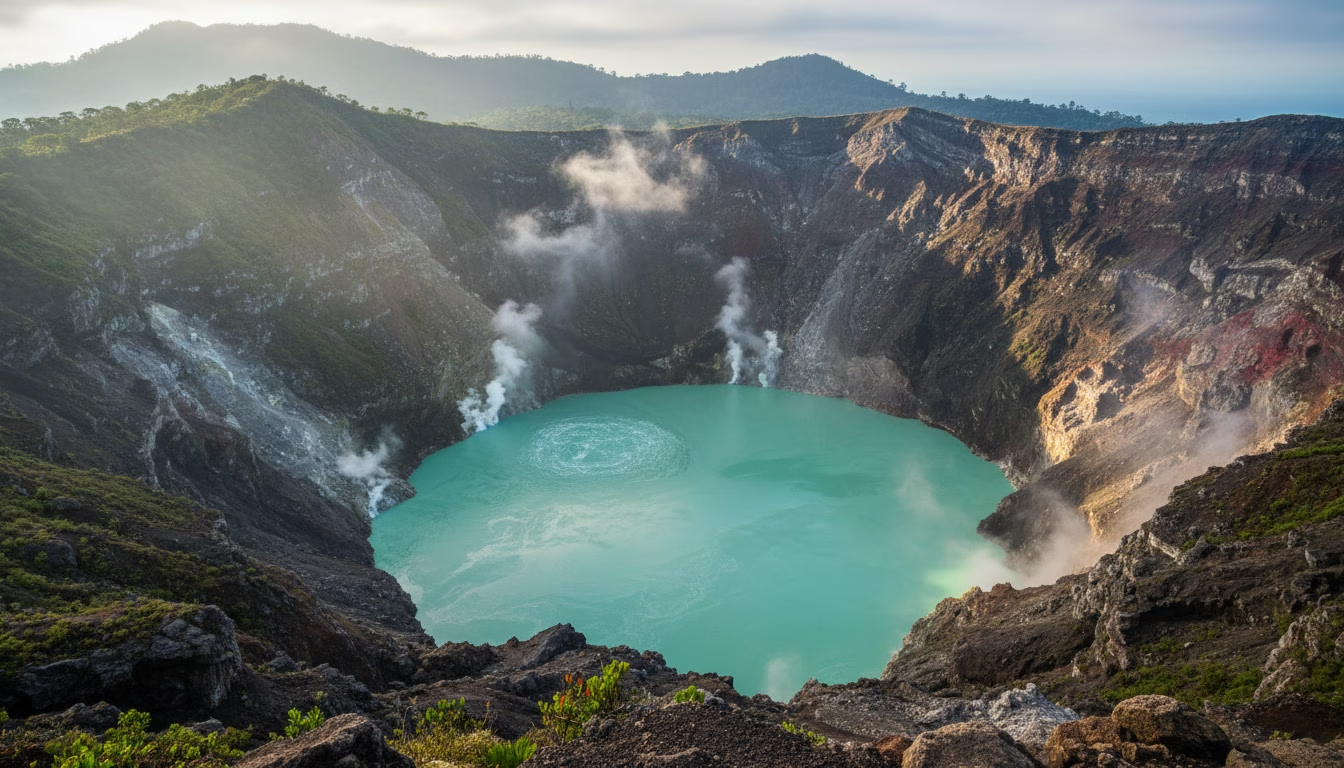
The Poás volcano is one of the most spectacular natural sites in Costa Rica. Accessible from San José in under two hours, this active stratovolcano rises to 2,708 metres above sea level and hosts one of the most impressive craters on the planet. The national park surrounding it attracts hundreds of thousands of visitors every year, drawn by the steaming acid lake, the cloud forest, and Botos lagoon. This guide brings together all the practical information you need to plan your visit with confidence, from reservations to weather tips and access routes.
Here is a summary table of the essential information to plan your visit to Poás National Park:
| Information | Detail |
|---|---|
| Altitude | 2,708 m |
| Province | Alajuela, Costa Rica |
| Distance from San José | About 50 km (1.5 hours by car) |
| Opening hours | 8am to 2pm (last slot at 1:20pm) |
| Entry fee (non-resident adult) | USD 15 |
| Reservation | Mandatory online at sinac.go.cr |
| Time at the viewpoint | 20 minutes maximum per group |
| Best time to visit | Dry season, early morning (December–April) |
| Average temperature on site | 12°C |
| Official webcam | ovsicori.una.ac.cr |
Overview of Poás Volcano in Costa Rica
An active volcano rising above 2,700 metres
The Poás volcano is a stratovolcano located 37 km north-west of San José, in the province of Alajuela. It rises to 2,708 metres and forms part of the country’s central mountain range. Since 1828, OVSICORI has recorded at least 39 eruptive episodes, making it one of the most active volcanoes in Central America.
The surrounding national park, the Parque Nacional Volcán Poás, was established in 1955 with an initial area of 1,200 hectares. Today it covers 6,506 hectares of protected tropical forest and volcanic zones. The park has been awarded the Tourism Sustainability Certification at Elite level, the highest distinction issued by the Costa Rican Tourism Institute.
One of the most impressive volcanic craters in the world
The main crater of Poás measures 1,320 metres in diameter and 300 metres deep. These dimensions place it among the largest active craters in the world. Its inner walls reveal successive layers of pyroclastic material, bearing witness to a geological history stretching back at least 11 million years.
The largest documented eruption occurred on 25 January 1910, when a column of steam and ash rose 8,000 metres above the crater. More recently, in April 2017, a major eruption forced authorities to close the park for over a year. The park was also closed from March to July 2025 following a surge in phreatic activity, before reopening on 30 July 2025.
Volcanic activity, fumaroles and acid lake
At the bottom of the crater lies the Laguna Caliente, a hot-water lake with a pH below 1, making it one of the most acidic natural bodies of water in the world. Its temperature fluctuates between 20 and 50°C. Sulphur fumaroles permanently escape from the inner walls, creating plumes of steam visible from the viewpoint.
Poás experiences frequent phreatic eruptions, which occur when water in the crater vaporises under magmatic heat. These explosions can hurl ash and rock fragments several hundred metres into the air. OVSICORI monitors Poás activity in real time from its volcanological observatory.
Why Visit Poás Volcano National Park
Gaze into the giant crater and its lagoon
Looking down into the vast crater of the Poás volcano from the viewpoint is an experience few can match. The acid lake changes colour with the volcano’s activity: it turns blue-green in calm periods, and cloudy yellow during eruptive phases. This natural colour palette exists almost nowhere else on Earth.
On a clear day, the view from the viewpoint stretches down into the central valley far below. But it is the crater itself that mesmerises, with its plumes of sulphurous vapour rising slowly into the cold mountain air. The spectacle lasts twenty minutes, the permitted time at the viewpoint, yet stays in the memory long after.
Discover Botos Lagoon in an ancient crater
A few hundred metres from the main crater lies Botos Lagoon, nestled in an ancient crater dormant for 7,500 years. Its cold water displays a vivid emerald green, surrounded by dense, misty vegetation. The contrast with the boiling acid lake in the neighbouring crater is striking.
The lagoon measures 400 metres in diameter and 14 metres in depth. It drains into the Río Ángel, a tributary of the Río Sarapiquí. It is a calm, almost contemplative spot that attracts a wide range of bird species. The trail leading to it passes through a particularly dense and photogenic cloud forest.
Explore the tropical forest and its biodiversity
Poás National Park is home to a high-altitude, very humid forest, unlike the lowland tropical forests found elsewhere in Costa Rica. The trees are covered in mosses, lichens and epiphytes. The atmosphere is cold, misty and strikingly beautiful in its own right.
Species you may encounter include hummingbirds, squirrels, rabbits, and occasionally coyotes. The park also shelters snakes, frogs and a wide diversity of insects. Orchids and bromeliads carpet the undergrowth, forming a natural garden of remarkable density.
What to See and Do in Poás National Park
The main crater viewpoint
The viewpoint is the highlight of any visit. You reach it from the park entrance along a 10 to 15-minute trail, well-marked and accessible to most visitors. The observation platform offers a direct view of the crater, provided the clouds stay away.
Since the park reopened in July 2025, groups are limited to a maximum of 108 people per time slot, with 20 minutes allowed at the viewpoint. Ballistic shelters have been installed nearby in case of sudden volcanic projections. A hard hat may be required depending on the volcano’s activity level.
Trails around Botos Lagoon
Several marked trails let you explore the park beyond the crater. The trail to Botos Lagoon is the most popular: it offers views of the high-altitude vegetation and ends at this emerald lake surrounded by forest. Allow 30 to 45 minutes return from the visitor centre.
Other trails, such as the Sendero Escalonia (500 m), allow you to observe flora and birds in a quieter setting. Some areas remained closed after the 2025 eruptions; check trail conditions on sinac.go.cr before your visit. Weather conditions can also make some sections slippery.
The visitor centre and exhibitions
The visitor centre is located at the park entrance, near the car park. It houses exhibitions on the geological history of Poás volcano, the park’s flora and fauna, and a scale model of the volcano that is particularly useful before heading to the crater.
Toilets and a souvenir shop are also available. Note that since some park zones were closed, it is no longer possible to buy water or food inside the park. Bring your own supplies before arriving, particularly a water bottle and a snack.
Wildlife and plant observation
The forest surrounding Poás volcano is a natural playground for nature lovers. Hummingbirds are especially numerous and approachable, making them ideal subjects for photography. Squirrels readily approach visitors in the picnic area when it is open.
On the plant side, the volcanic slopes support species adapted to the acidic, cold conditions. Tree ferns reach impressive heights, and endemic bromeliad species are found at every turn of the trail. A good pair of binoculars is useful for spotting birds in the canopy.
How to Visit Poás Volcano
Mandatory reservation and park access
Since 2018, online reservations are mandatory to visit Poas National Park. Bookings are made exclusively through the official SINAC website: sinac.go.cr. Create an account first, then select your time slot. You will need each visitor’s passport number at the time of purchase.
Payment is made online and a confirmation is sent by email. Based on the latest available information, it is recommended to print this confirmation rather than presenting a screenshot on your phone. One reservation allows the purchase of up to 10 tickets per transaction.
Limited viewing time at the viewpoint
The observation time at the crater viewpoint is strictly limited to 20 minutes per group. This rule is designed to reduce exposure to volcanic gases, particularly sulphur dioxide, which can cause respiratory irritation. It applies regardless of weather or visibility conditions.
This may sound brief, but it is enough to observe the crater and take photographs in good conditions. The remaining time can be spent on the trails and at Botos Lagoon. A complete visit to the park generally takes between 2 and 3 hours in total.
Opening hours and visitor capacity
Poás Volcano National Park is open every day from 8am to 2pm, with the last entry slot at 1:20pm. Since the July 2025 reopening, nineteen groups are authorised per day. The car park, managed by the Costa Rican Red Cross, costs approximately USD 3.50 for a car.
Note that the park may close without notice in the event of sudden volcanic activity. This risk is inherent to the nature of the site: Poás is a living volcano, monitored around the clock by OVSICORI. Check official information the evening before and on the morning of your visit.
How to Get to Poás Volcano National Park
Access from San José and Alajuela
The Poás volcano lies about 50 km north-west of San José, roughly 1.5 hours by road under normal conditions. From the capital, take the General Cañas motorway to Alajuela, then national route 712 towards Poasito, passing through Itiquis and Fraijanes.
An alternative route goes through Heredia: heading up from Barva de Heredia, then Varablanca, to Poasito. Both itineraries offer beautiful views of the central valley. The final access road to the park is paved all the way to the entrance, and manageable without a 4×4 outside of heavy rain periods.
The main routes to the volcano
National route 712, also known as the Poasito road, is the main access route to the park. It departs from Alajuela and climbs steadily to the park entrance, passing through areas of strawberry, coffee and palm cultivation. The road is in good condition and well signposted from Alajuela.
Coming from Juan Santamaría International Airport, the journey takes about 45 minutes to one hour depending on traffic. Signs regularly indicate the direction of the volcano from the main roads. A GPS or navigation app is still recommended for visitors unfamiliar with the area.
Coming by car or local transport
A rental car remains the most practical way to visit Poás park. It gives you the flexibility to leave early in the morning, before the clouds form. A standard vehicle is sufficient in the dry season; a 4×4 is preferable in the rainy season if you are wary of wet mountain roads.
Buses are also available from the TUASA terminal in Alajuela. Two morning departures run daily, at 9am and 11:30am, with return services at 12:30pm and 2:30pm. The journey takes between 1 and 1.5 hours, for a cost of around 1,135 colones (under USD 2). This option is economical but reduces scheduling flexibility.
When to Visit Poás Volcano to See the Crater
The importance of weather and visibility
Weather is the key variable when visiting Poás volcano. The crater is frequently shrouded in thick fog, particularly during the rainy season from May to November. In overcast conditions, the acid lake and fumaroles disappear behind a wall of cloud, and the visit loses much of its appeal.
The dry season, from December to April, offers the best chances of an unobstructed view. January, February and March are generally the most favourable months. However, no guarantees are possible: the mountain generates its own weather, and fog can appear within minutes even in the dry season.
Why an early morning visit is best
Arriving at opening time, at 8am, maximises the chances of a clear sky. Clouds tend to form progressively through the morning and typically fill the crater by midday. The first time slots are therefore the most sought-after, particularly during high season.
A tip I use consistently: check the crater webcam on the OVSICORI website on the morning of your visit, before setting off. If the crater is visible at 7am, conditions are likely to remain good for the following hours. If fog has already settled at dawn, it is better to postpone.
Practical Tips to Prepare Your Visit
What to wear at 2,700 m altitude
At 2,708 metres, the average temperature in Poás park is 12°C, but the wind and constant drizzle can make it feel significantly colder. A waterproof jacket and extra layers are essential, even in the dry season. The temperature difference compared to San José or Alajuela often surprises first-time visitors.
A light windbreaker, a warm mid-layer and closed-toe shoes form the basis. If you have respiratory conditions, be aware that sulphurous gas emissions can be irritating at the viewpoint. A simple face mask may be helpful, especially during periods of heightened volcanic activity.
Recommended equipment for the trails
The park’s trails are well maintained and require no technical equipment. Walking shoes with grippy soles are nevertheless recommended, as the ground can be slippery after rain or in the ever-present mountain mist. Sandals and town shoes are best left at the hotel.
Bring your own water and food, as catering services are limited or unavailable in certain park zones since the 2025 closures. A water bottle of at least one litre, a snack, sunscreen and sunglasses make up a simple but effective kit.
Checking webcams and weather conditions
OVSICORI provides a real-time webcam of the Poás crater, accessible via its official website: ovsicori.una.ac.cr. This is the best way to check whether the crater is visible before making the drive from San José or Alajuela. I recommend checking it the evening before and again on the morning of your visit.
For park status (openings, unexpected closures, volcanic alert levels), the SINAC website is the reference. If in any doubt about volcanic activity, do not improvise: Costa Rican authorities base these decisions on rigorous scientific data, and situations can change quickly.
FAQ on Poás Volcano and Poás National Park
Do you need to book in advance to visit Poás volcano?
Yes, reservation is mandatory since 2018. It is done exclusively online at sinac.go.cr. Booking a few days in advance is advisable, especially during high season (December–April), without booking too far ahead so you can adjust the date based on the weather. In the event of an unplanned park closure, contact SINAC to reschedule.
How much does entry to Poás National Park cost?
Entry to Poas National Park costs USD 15 per non-resident adult and USD 5 for children aged 2 to 12. Under-2s enter free. Parking is paid separately: approximately USD 3.50 for a car, managed by the Costa Rican Red Cross. Tickets are paid online; parking is paid on-site in colones.
How long does the crater visit last?
The observation time at the viewpoint is limited to 20 minutes per group for safety reasons related to gas emissions. The walk from the park entrance to the viewpoint takes 10 to 15 minutes. Including the trails to Botos Lagoon and a visit to the visitor centre, allow 2 to 3 hours in total for a complete park visit.
Can you see Botos Lagoon all year round?
Access to Botos Lagoon depends on trail conditions, which may be closed during periods of intense volcanic activity or for maintenance work. Before the 2025 crisis, some trails had already been inaccessible since 2018. Check information on sinac.go.cr before your visit. On a clear day, the lagoon is visible year-round if the trail is open.
Is Poás volcano dangerous to visit?
Poás volcano is active and presents real risks associated with sudden phreatic eruptions and toxic gases. Authorities have implemented a strict protocol to manage visits: limited duration, reduced group sizes, ballistic shelters, and permanent monitoring. The visit is not recommended for people with respiratory conditions, children under 12, or frail individuals over 65.