
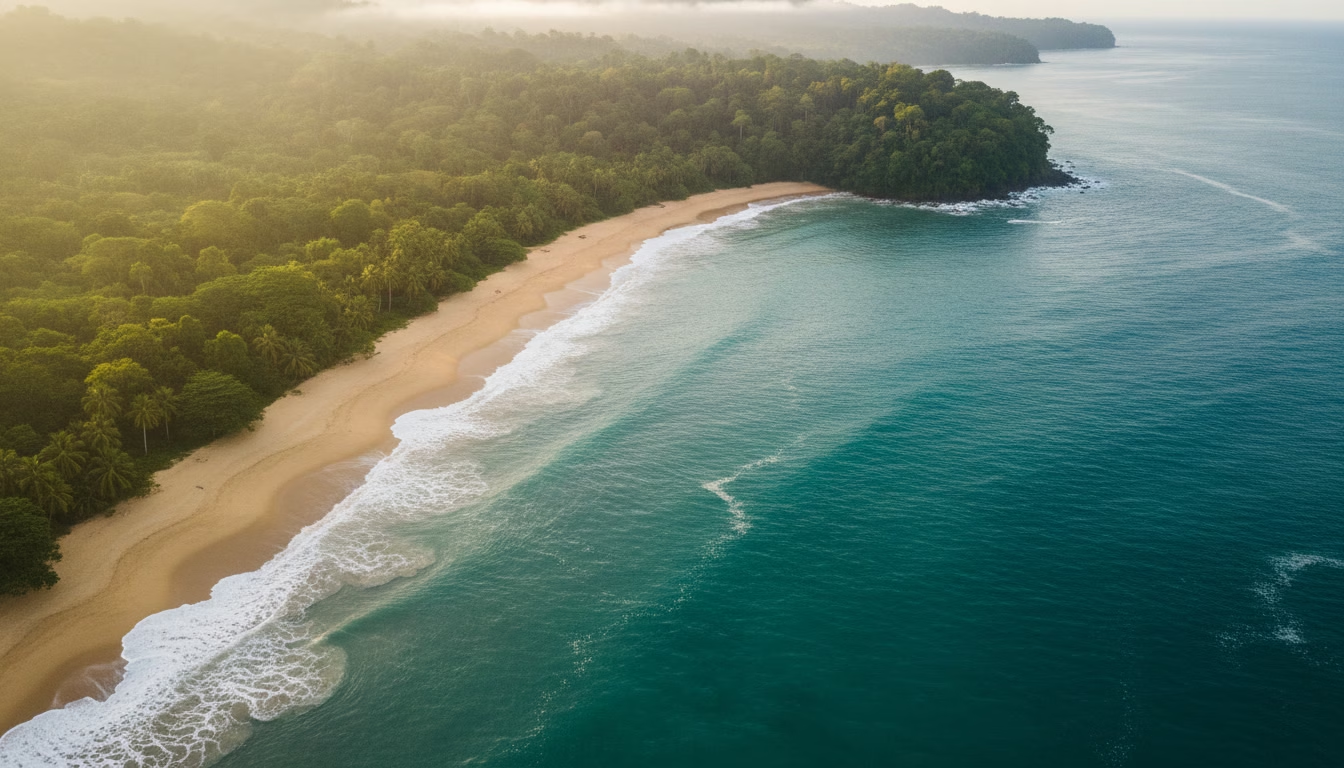
Drake Bay is one of the most pristine destinations in Costa Rica. Nestled at the northern tip of the Osa Peninsula on the Pacific coast, it draws travellers seeking raw nature, far removed from typical tourist circuits. You can reach it by boat from Sierpe, by plane from San José, or by 4×4 for the more adventurous. Drake Bay gives access to Corcovado National Park, the Isla del Caño Biological Reserve, near-deserted beaches, and one of the longest humpback whale watching seasons in the world. This guide gives you everything you need to plan your stay.
| Key Information | Details |
|---|---|
| Location | Northern Osa Peninsula, Puntarenas Province, Costa Rica |
| Main access | Boat from Sierpe (1hr, ~15-20 USD) or flight from San José (45 min) |
| Best season for diving | December to April (calm seas, visibility up to 30 m) |
| Humpback whales (Southern Hemisphere) | Mid-July to mid-November |
| Humpback whales (Northern Hemisphere) | December to mid-April |
| Corcovado entrance fee | $15 USD/person/day + mandatory certified guide |
| Isla del Caño diving tour | ~$165 USD per person (2 dives, equipment included) |
| Recommended stay | Minimum 3 to 5 nights |
| Currency | Costa Rican colón (CRC) and USD accepted; no ATM on site |
Where Is Bahía Drake and Why This Destination Is Unique
Location on the Osa Peninsula in Costa Rica
Bahía Drake sits at the northern tip of the Osa Peninsula in Puntarenas Province. The main village is called Agujitas de Drake. This area ranks among the most isolated in the country: no ATM machines are available on site, and road connections remain limited despite notable improvements since 2024.
The Osa Peninsula is one of the last great expanses of primary tropical forest in Central America. Drake Bay is its northern gateway. Annual rainfall reaches 5 metres here, which explains the exceptional density of flora and fauna.
The Origin of the Name Linked to Privateer Sir Francis Drake
The bay takes its name from Sir Francis Drake, the English privateer and explorer, who is said to have anchored here in 1579 during his circumnavigation of the globe. According to legend, he even buried treasure here, never recovered to this day. The local name is pronounced “Dra-kay”, in the Spanish manner, not in English.
The history of Drake Bay weaves together maritime adventure and pirate mystery. When you first discover the beauty of the bay, it is easy to understand why a 16th-century navigator would have chosen this spot to drop anchor.
A Hotspot of Biodiversity Between Jungle and the Pacific Ocean
National Geographic described the Osa Peninsula as “the most biologically intense place on Earth.” Bahía Drake alone encompasses several ecosystems: humid tropical forest, mangrove, coral reefs and pelagic zones. More than 400 bird species and dozens of mammals have been recorded here.
Drake Bay borders Corcovado National Park and the Isla del Caño Reserve directly, two world-renowned protected areas. It is this layering of natural habitats that makes the destination unique on the American continent.
How to Get to Bahía Drake
Reaching Drake Bay by Boat from Sierpe
The boat journey from Sierpe remains the most commonly used option. Boats depart from the jetty at Restaurante Oleaje Sereno, generally at 11:30am and around 3:30–4pm. The crossing takes about one hour and first winds through the spectacular Sierpe River mangrove before hitting the Pacific swells.
The fare is around 15 to 20 USD per person depending on the departure time. Protect your electronic devices in waterproof bags without exception: waves can be severe, particularly during the rainy season. From San José to Sierpe, allow about 5 hours by bus or car.
Taking a Domestic Flight from San José
Daily domestic flights connect San José’s Juan Santamaría Airport to Drake Bay Airport. Flight time is approximately 45 minutes. Sansa and Skyway airlines serve this route, with fares varying according to season and how far in advance you book.
Flying is the most comfortable and fastest option, particularly recommended if you are travelling with bulky luggage or with children. Book several weeks ahead during the high season between December and April, as seats are limited on these small aircraft.
Getting to Bahía Drake by Car or 4×4
From Uvita or Dominical, it is now possible to reach Drake Bay by car. The road has improved considerably in recent years. A 4×4 vehicle is still recommended, particularly during the rainy season, as some sections remain unpaved and involve several river crossings.
This option offers valuable independence once you arrive. Several lodges will transport your luggage by boat from the coast if your accommodation is not directly accessible by road. The tracks pass through breathtaking scenery that is worth the journey in itself.
What to Do in Bahía Drake: Must-Do Activities
Exploring Corcovado National Park
Corcovado is the primary reason most travellers make the trip to Drake Bay. The park covers 45,000 hectares of primary tropical forest and protects 2.5% of the world’s biodiversity. An ICT-certified guide is mandatory since 2014 to enter the park, which also means you will spot far more wildlife than you would alone.
From Drake Bay, the park is accessible via the San Pedrillo or La Sirena ranger stations. Full-day excursions are offered by all lodges in the area, at around 110 to 150 USD per person, including boat transfer and entrance fee.
Diving and Snorkelling at Isla del Caño
The Isla del Caño Biological Reserve lies about 20 km offshore from Drake Bay, roughly 45 minutes by boat. The underwater world is exceptional: white-tip reef sharks, manta rays, sea turtles, schools of jacks and well-preserved coral. Visibility can reach 30 metres in the dry season.
A diving excursion (2 dives, full equipment) costs around 165 USD per person. Snorkelling is accessible from 60–80 USD depending on the operator. The best period for diving runs from December to April, when the sea is calmest.
Hiking to San Josecito Beach
The public trail of Bahía Drake links the village of Agujitas to San Josecito beach over about 19 km. The walk takes 3.5 to 4 hours at a steady pace. Set off early, around 7am, to avoid the heat and arrive at San Josecito before the rising tide blocks certain sections of the path.
This trail passes partly through Punta Rio Claro National Park, where scarlet macaws and white-faced capuchin monkeys are regularly spotted. San Josecito beach is almost always deserted: it is one of the most wild and beautiful spots on the entire peninsula.
Whale Watching, Dolphins and Birdwatching
Drake Bay claims the longest humpback whale watching season in the world, thanks to two distinct migrations. Southern Hemisphere whales, the more numerous, are present from mid-July to mid-November. Those from the Northern Hemisphere arrive from December to mid-April.
Dolphins are present year-round: spotted dolphins, bottlenose dolphins and rough-toothed dolphins sometimes form groups of several hundred individuals. Excursions last 4 to 6 hours and often include a hydrophone to listen to cetacean songs.
Kayaking, Sport Fishing and Nature Excursions
Sport fishing attracts many visitors to Drake Bay, as the waters of Costa Rica’s South Pacific teem with marlin, sailfish and mahi-mahi. Outings depart by boat from Agujitas with experienced local guides. Catch and release is the practice encouraged by most operators.
Sea kayaking lets you explore the coastline at your own pace, between coves and isolated beaches. Some lodges also organise kayak outings on the río Agujitas, through the mangrove at sunrise, when wildlife is particularly active.
The Most Beautiful Beaches Around Bahía Drake
Playa San Josecito, a Wild Beach in the Heart of the Jungle
San Josecito is arguably the most spectacular beach in the area. Accessible on foot from Agujitas (about 3.5 hours) or by boat from Drake Bay, it stretches several hundred metres between jungle and Pacific. No shops or facilities exist here, which keeps it almost always deserted.
Scarlet macaws regularly fly overhead, and howler monkeys make themselves heard from the canopy. Arriving by boat, you skirt a rocky coastline pounded by waves before emerging onto this stretch of fine sand that few travellers ever discover.
Playa Cocalito, Ideal for a Sunset
Playa Cocalito sits roughly halfway between Agujitas and San Josecito. You can reach it on foot in about 45 minutes from the village or along the public trail. The beach is small, framed by rocks and facing due west, making it an ideal viewpoint at sunset.
A few discreet lodges are situated nearby, allowing you to spend the night in a very secluded setting. The water here is generally calmer than at San Josecito, with a sandy bottom suitable for swimming.
Secret Coves and Beaches Accessible on Foot or by Boat
Between Agujitas and San Josecito, several small coves hide behind rocky headlands. You discover them at low tide by walking along the coast, or by asking a local boatman to drop you off. These spots without names on maps are often the most beautiful.
Playa Colorada, opposite the village of Agujitas, is the most accessible beach in the bay. Most boats depart and arrive here. It is less isolated, but practical for an end-of-day swim.
Exploring Corcovado National Park from Bahía Drake
San Pedrillo Ranger Station: Wild Nature and Quick Access
San Pedrillo is the ranger station closest to Drake Bay. You reach it by boat in about one hour, or on foot from Agujitas via a 14 km coastal trail. Entry gives access to waterfalls, dense primary vegetation and an area where scarlet macaws are ever-present.
This sector sees fewer visitors than La Sirena, which often allows you to observe wildlife in complete peace. Guides regularly stop to point out poison dart frogs, fer-de-lance snakes or basilisk lizards on the mossy trunks lining the trails.
La Sirena Ranger Station: Trails and Exceptional Biodiversity
La Sirena is the biological heart of Corcovado. It is accessible only by boat from Drake Bay, in roughly 45 minutes to one hour depending on sea conditions. This is the sector where chances of spotting a Baird’s tapir are highest, particularly along beaches and rivers at dawn.
La Sirena is the only place in the park where you can spend the night on site (dormitories, reservation mandatory through SINAC). Staying a night at the station allows access to the trails from 5am, well before the arrival of day-trip groups.
Emblematic Wildlife: Tapirs, Monkeys, Macaws and Big Cats
Corcovado is home to all four monkey species found in Costa Rica: howler monkey, spider monkey, white-faced capuchin and squirrel monkey. Baird’s tapirs regularly visit beaches and riverbanks. Four cat species live within the park, including puma and jaguar, though the latter remain highly elusive.
Birdwatchers will find Corcovado inexhaustible: more than 400 species have been recorded, including the much-sought harpy eagle. The park is also a major stronghold for white-lipped peccaries and coatis.
Other Nature Experiences in Bahía Drake
The Trillo de la Danta Trail and Community Tourism
The Trillo de la Danta is a hiking trail managed by the local community of Agujitas. It crosses several kilometres of secondary and primary forest, with tapir observation points, rivers to cross and a deeply immersive atmosphere. Revenue generated goes directly to village families.
This form of community tourism is one of the most authentic ways to experience the Osa Peninsula. Local guides know every tree and every birdsong, and share a knowledge of the land that few outside guides can match.
Night Excursions in the Tropical Forest
Night transforms the forest of Drake Bay completely. Guided excursions of about 2.5 hours depart every evening around 7:30pm from several lodges. You can observe poison dart frogs, trapdoor spiders, caimans in streams and a galaxy of bioluminescent insects. Tracie the Bug Lady runs one of the most acclaimed night tours in the area.
These nocturnal tours complement daytime activities and combine easily with a Trillo de la Danta excursion. Expect to pay between 40 and 65 USD per person depending on the operator.
Kayaking and Body Rafting on the Río Claro
The Río Claro rises in the heights of the Osa Peninsula and flows into the Pacific Ocean near San Josecito. Some operators offer kayaking or body rafting descents in its crystal-clear waters. The river cuts through intact primary forest and is a great spot to observe kingfishers, otters and sometimes crocodiles.
This activity is generally offered as a half-day outing, often paired with a visit to San Josecito beach. It makes an excellent alternative to sea trips on days when swell makes navigation uncomfortable.
When to Visit Bahía Drake: Climate and Best Season
Dry Season and Ideal Conditions for Diving
The dry season runs from December to April. During this period rain is rare, the sea is calmer and underwater visibility at Isla del Caño can reach 30 metres. This is the peak tourist season: book lodges and excursions several weeks ahead, or even two months in advance if you travel in January or February.
The rainy season, from May to November, should not be dismissed. Rain generally falls in the late afternoon, and the forest is then particularly lush. Accommodation prices drop noticeably, and tourist numbers are far lower.
Humpback Whale Watching Periods
Drake Bay enjoys the longest humpback whale season in the world, thanks to two distinct migrations. Southern Hemisphere whales, the most numerous, are present from mid-July to mid-November. Northern Hemisphere whales arrive from December to mid-April.
August and September offer the best compromise: the southern whales are at peak season, mothers with calves are frequently spotted, and weather conditions remain acceptable despite the green season. Hydrophones allow whale songs to be heard during excursions.
Practical Tips for Planning Your Stay in Bahía Drake
How Many Days to Stay at Drake Bay
Three nights is the reasonable minimum to visit Corcovado, dive at Isla del Caño and enjoy the bay. Specialists of the area typically recommend four to five nights, which allows time for a night excursion, a hike to San Josecito and a whale watching trip.
Bear in mind that excursions generally take up an entire morning. It is better to plan only one activity per day to fully enjoy each experience. Trying to fit in two back-to-back is exhausting and reduces the quality of each outing.
Where to Sleep: Lodges, Eco-lodges and Accommodation
Accommodation in Drake Bay ranges from eco-luxury lodges to small family-run guesthouses. Among the well-regarded establishments: La Paloma Lodge (panoramic bay views), Copa de Arbol (direct beach access), Drake Bay Wilderness Resort (all-inclusive packages). Most lodges include meals, as independent dining options are limited on site.
Plan to pay in cash: there are no ATMs in Drake Bay. Bring enough dollars or colones from San José or Palmar Norte. A few establishments accept credit cards, but this is not universal.
Tips for Getting the Most from Excursions
Book your Corcovado excursions well before arriving, especially in high season. The park is capped at 330 visitors per day, distributed across the ranger stations. La Sirena station allows 100 visitors per day, and places often book up weeks in advance during peak season.
Set off early in the morning for all activities: wildlife is most active at dawn, the heat is manageable and you avoid most of the afternoon showers. Always bring plenty of water, a light waterproof jacket and water-resistant sun protection.
FAQ About Bahía Drake
Is Bahía Drake Worth a Visit During a Trip to Costa Rica?
Yes, provided you are seeking nature rather than urban comfort. Bahía Drake brings together in one place primary tropical forest, an exceptional marine reserve, abundant wildlife and direct access to Corcovado National Park. It is one of the most authentic destinations in Costa Rica, far from the beach resorts of Guanacaste. Travellers who go there rarely leave disappointed.
How Much Does a Corcovado Excursion from Drake Bay Cost?
Expect to pay between 110 and 150 USD per person for a full-day excursion including boat transfer, certified guide, park entrance (15 USD) and lunch. Prices vary depending on the lodge and operator. For an overnight stay at La Sirena station, the budget rises to 200–250 USD depending on the package. Book at least 4 to 6 weeks ahead in high season.
Can You Visit Bahía Drake Without a Guide?
Moving freely around the bay, walking the public trail or swimming requires no guide. However, access to Corcovado National Park requires a mandatory ICT-certified guide since 2014. This rule applies to all park stations, including San Pedrillo and La Sirena. Outside Corcovado, activities such as kayaking or hiking to San Josecito are accessible independently.
What Is the Difference Between Drake Bay and the Osa Peninsula?
The Osa Peninsula is a vast territory of protected tropical forest, of which Drake Bay is just one part, at the northern end. The other major gateway to the peninsula is Puerto Jiménez, to the south-east. Drake Bay accesses Corcovado from the north (San Pedrillo and La Sirena stations), while Puerto Jiménez opens onto the La Leona and Los Patos stations. The two villages have a different character: Drake Bay is more isolated and rustic, Puerto Jiménez more lively and better equipped.