
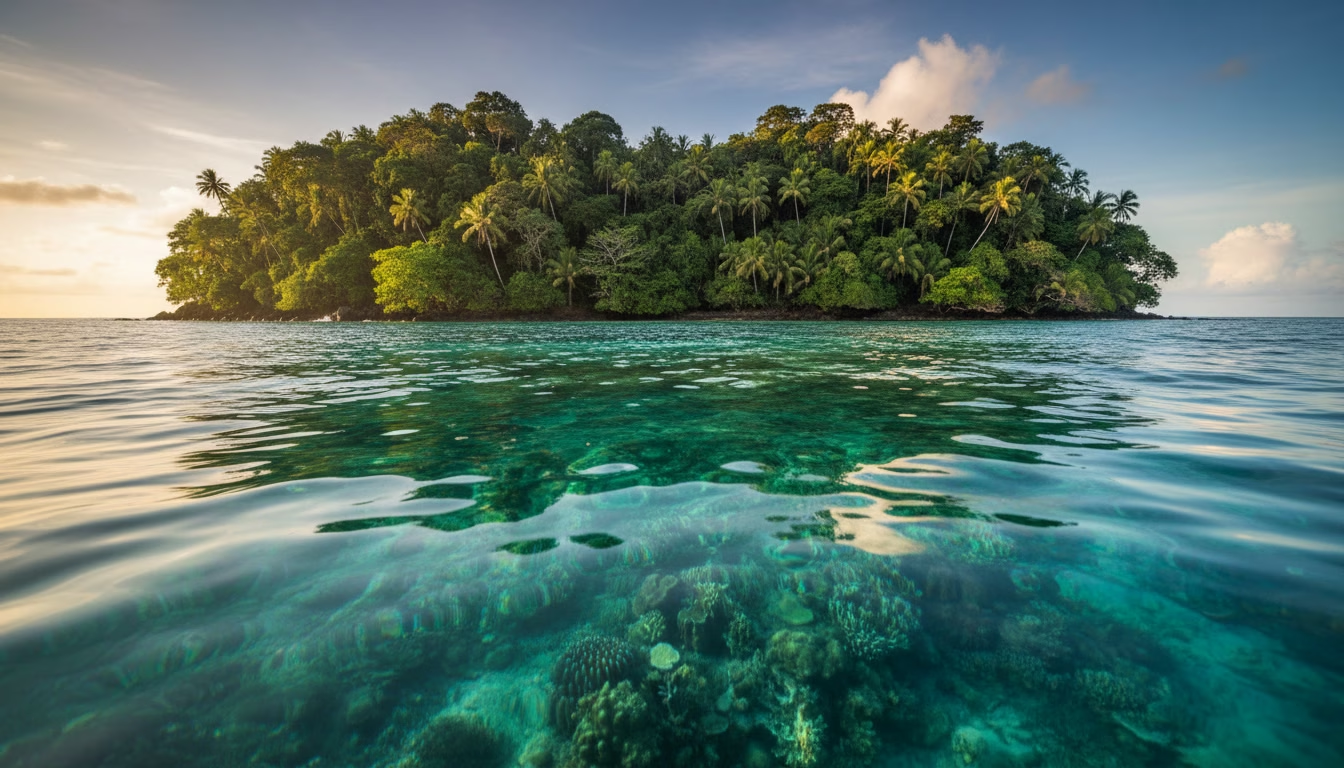
The first time I spotted Isla del Caño from a boat’s bow, somewhere off Drake Bay, I knew this place was different. A green silhouette rising from the Pacific, surrounded by water of startling clarity, protected since 1978 by the Costa Rican government. The Reserva Biológica Isla del Caño spans 320 hectares of land and nearly 5,800 hectares of sea. It is one of the best-preserved marine reserves in all of Costa Rica, and easily one of the finest snorkelling and diving spots in Central America’s Pacific. This guide gives you everything you need to plan your excursion with confidence.
| Criterion | Details |
|---|---|
| Location | 16 km north-west of the Osa Peninsula, Province of Puntarenas |
| Status | National Biological Reserve (since 1978) |
| Departure points | Drake Bay (~45 min by boat), Uvita (~1.5–2h), Sierpe (~1h) |
| Daily capacity | 200 visitors maximum (100 in the morning, 100 in the afternoon) |
| Entrance fee | Approximately $15 USD per person (advance reservation via SINAC required) |
| All-inclusive tour price | Between $100 and $150 USD per person |
| Best period | December to April (dry season); July–October for southern humpback whales |
| Main activities | Snorkelling, scuba diving, hike to the viewpoint |
| Guide required | Yes, a SINAC/ACOSA-certified guide is mandatory |
Where Is Isla del Caño in Costa Rica?
Location near the Osa Peninsula and Drake Bay
Isla del Caño lies in southern Pacific Costa Rica, 16 kilometres north-west of the Osa Peninsula, in the province of Puntarenas. It sits roughly 20 kilometres from Drake Bay and about an hour by boat from Sierpe. Its position, far offshore from one of the country’s most remote regions, is precisely what makes it so extraordinary.
A Protected Biological Reserve in the Pacific
The reserve was established by law in 1978. It was originally part of Corcovado National Park before being separated in 2006. Today it is managed by SINAC within the ACOSA framework. Its protected marine zone contains five coral platforms ranging in size from 0.8 to 4.2 hectares each.
Why Isla del Caño Is One of the Best Snorkelling and Diving Spots
One of Costa Rica’s Richest Coral Reefs
The waters surrounding isla del caño host one of the most extensive and well-preserved coral reef systems on the entire Pacific coast. Scientists have recorded 19 coral species here, with some specimens reaching 4.5 metres. Visibility can exceed 24 metres on clear days, which is exceptional for this part of the world.
The Marine Animals You Can Observe
Everything happens below the surface here. White-tipped reef sharks and hawksbill turtles appear on nearly every outing. Eagle rays, manta rays, moray eels, barracudas, octopuses, and schools of tuna are also common sightings. Whale sharks and hammerhead sharks have been reported by divers, particularly during peak season.
Ideal Season to See Humpback Whales
Isla del Caño is one of the few places in the world hosting two distinct humpback whale populations. Southern-hemisphere whales, travelling from Patagonia, arrive between July and October. Northern-hemisphere whales frequent these waters from December to April. In both seasons, spotting them from the boat during the crossing is an experience that stays with you.
What to Do on an Excursion to Isla del Caño
Snorkelling in an Exceptional Marine Reserve
Snorkelling is the star activity on isla del caño. No certification is required, and guides select spots according to the group’s level. The shallow reefs allow you to glide a few metres below the surface alongside turtles at arm’s reach. Two sessions of roughly 45 minutes are usually included, separated by a rest on the beach.
Scuba Diving and Available Certifications
The reserve has around ten dive sites marked by buoys. Among the most well-known: Coral Garden, ideal for beginners, and Shark Cave, popular with more experienced divers. Some agencies also offer introductory discover dives on site. The number of divers per zone is capped at ten people at any one time.
Beach Break and Hike to the Viewpoint
Between underwater sessions, a pause on the island’s sole white-sand beach, located to the north, is always welcome. A marked trail leads up to the mirador, the island’s lookout point, where the view over the Pacific is breathtaking. A maximum of 20 people are allowed on the trails simultaneously, which ensures a sense of peace even during high season.
How an Excursion to Isla del Caño Works
Departure by Boat from Uvita, Drake Bay or Sierpe
The three main departure points are Uvita, Drake Bay and Sierpe. From Uvita and the Marino Ballena National Park, count 1.5 to 2 hours of navigation. From Drake Bay, the crossing takes 45 minutes to an hour depending on sea conditions. From Sierpe, the boat first travels upriver before heading out to sea, for a total crossing time of about one hour.
The Different Snorkelling Sessions
Once on site, guides choose from around ten spots based on current conditions and visibility. The first session usually explores the slightly deeper offshore reefs. The second, often closer to shore, tends to hold the best surprises: ascending turtles, sharks resting on the seabed. A beach break between the two gives everyone time to recover.
Duration, Meals and Return to Shore
A full excursion lasts between 7 and 9 hours, including travel. Lunch is served on board or at a nearby beach, most often Playa San Josecito, a sheltered cove about 50 minutes from the island. The return to shore generally takes place in the mid-afternoon, around 2–3 pm depending on the starting point.
How to Visit Isla del Caño: Access, Prices and Booking
Limited Visitor Numbers and Mandatory Guide
The reserve admits only 200 visitors per day, split between two time slots: 7 am to 11 am in the morning and 11 am to 3 pm in the afternoon. Access without an ACOSA-certified guide is impossible. No independent visitor may reach the island by private means without an accredited guide. SINAC rangers check all credentials on site.
Entrance Fees and Excursion Prices
The entry fee to the reserve is approximately $15 USD per person for foreign nationals. This amount is usually included in the organised tour price. Expect to pay between $100 and $150 USD per person for a complete snorkelling excursion (transport, equipment, guide, lunch). Diving excursions cost slightly more, around $150–200 USD depending on the operator and number of dives.
When to Book Your Excursion
Reservations for isla del caño can be made up to 8 days in advance through SINAC, via the email address reservaciones.pnc@sinac.go.cr. Most local agencies handle this step for their clients. During high season (December to April), morning slots fill up very quickly. I recommend booking as soon as your travel dates are confirmed, at least two weeks ahead.
History and Pre-Columbian Remains on Isla del Caño
The Mysterious Stone Spheres of the Diquís Culture
The island is not only a marine sanctuary. It is home to several perfectly round stone spheres attributed to the Diquís culture, one of the most advanced pre-Columbian civilisations in Costa Rica. These spheres, carved from rock whose source lies more than 100 kilometres away, represent one of the most compelling archaeological enigmas in Central America.
An Ancient Funerary and Ceremonial Site
Between 700 and 1500 BCE, the island is believed to have served as a burial ground for tribal chiefs of the Chiriqui, Quepos or Brunca peoples. Tombs and archaeological remains have been unearthed on the island. Access to these sites is now strictly limited: only the trail leading to the mirador is open to visitors, which protects the integrity of this heritage.
Wildlife, Flora and Ecosystems of the Biological Reserve
Tropical Forest, Plants and Island Landscapes
The terrestrial portion of the reserve is covered by a humid tropical forest with 158 recorded plant species. Tree ferns, heliconias, climbing vines and a few introduced species such as mango and banana trees are present. The steep cliffs bordering part of the island add a rugged, imposing character to the landscape.
A Sanctuary for Whales, Dolphins and Turtles
The marine zone is a recognised breeding site for humpback whales from both hemispheres. A resident population of bottlenose dolphins (tursiops) frequents these waters year-round. Hawksbill and green turtles regularly come ashore to nest on the island’s beaches, which is classified as a priority conservation zone by Costa Rican authorities.
Regulations and Rules to Respect in the Reserve
Wildlife Protection and Visitor Restrictions
Recreational diving is only permitted in areas marked by buoys. A maximum of 10 divers at the same time is allowed per dive zone. It is strictly forbidden to remove any natural element from the reserve, whether living or dead: corals, shells, fish. Boats may not anchor within 200 metres of the operations centre.
Prohibited Activities and Best Practices
Camping on the island is strictly forbidden, as is fishing, feeding animals or leaving the marked trails. Drone use requires a specific Costa Rican civil aviation licence. For snorkelling, using biodegradable sunscreen is strongly recommended to protect the coral reefs. These rules are set out in decree 40700-MINAE.
Practical Tips to Prepare Your Visit
What to Pack for the Excursion
Snorkelling equipment (mask, snorkel, fins, life jacket) is provided by agencies. Remember to bring biodegradable sunscreen, a towel, a hat, sunglasses and a water bottle. A dry bag to protect your belongings is useful. In Drake Bay, there are no ATMs: bring cash in dollars or colones before you arrive.
Best Time to Visit Isla del Caño
The dry season, from December to April, offers the best sea conditions and the clearest underwater visibility. Outside these months, swell can sometimes cancel outings or reduce visibility. July to October remains attractive for whale enthusiasts. Snorkelling is technically possible year-round thanks to the island’s offshore position.
Safety Tips for Snorkelling
Wearing a life jacket is mandatory for snorkelling, even for strong swimmers. Guides remain in the water with the group at all times. If you are prone to seasickness, sit at the back of the boat. In the event of a current, do not fight it; stay close to the group. The white-tipped reef sharks on the reefs are harmless to humans.
FAQ about Isla del Caño
Can You Visit Isla del Caño Without a Guide?
No. Access to the biological reserve isla del caño is strictly impossible without an ACOSA-certified guide registered with SINAC’s sustainable tourism programme. This rule applies to all visitors, regardless of their experience. No independent boat visit is permitted without an accredited guide. Rangers on site check all credentials without exception.
What Is the Difference Between Snorkelling and Diving at Caño?
Snorkelling is practised at the surface with a mask, snorkel and fins, with no heavy equipment or certification required. Scuba diving allows exploration of depths up to around 20 metres, but requires at minimum a PADI Open Water certification or equivalent. Both activities take place at different sites, with diving giving access to deeper zones and complementary marine life.
How Many People Can Visit the Reserve Per Day?
The capacity is set at 200 people per day: 100 on the morning slot (7 am–11 am) and 100 on the afternoon slot (11 am–3 pm). This quota covers both snorkellers and divers. During high season, these slots are often fully booked several days in advance. Reservations are made through SINAC and are not transferable to other individuals.
Where to Depart for an Excursion to Isla del Caño?
The three official departure points are Drake Bay, Sierpe and Uvita. Drake Bay is the closest, with 45 minutes to 1 hour of crossing. Sierpe offers an interesting approach via its namesake river before reaching the ocean. Uvita is the most accessible starting point from San José or Quepos, with approximately 1.5–2 hours of navigation. Reputable agencies operate from each of these locations.