
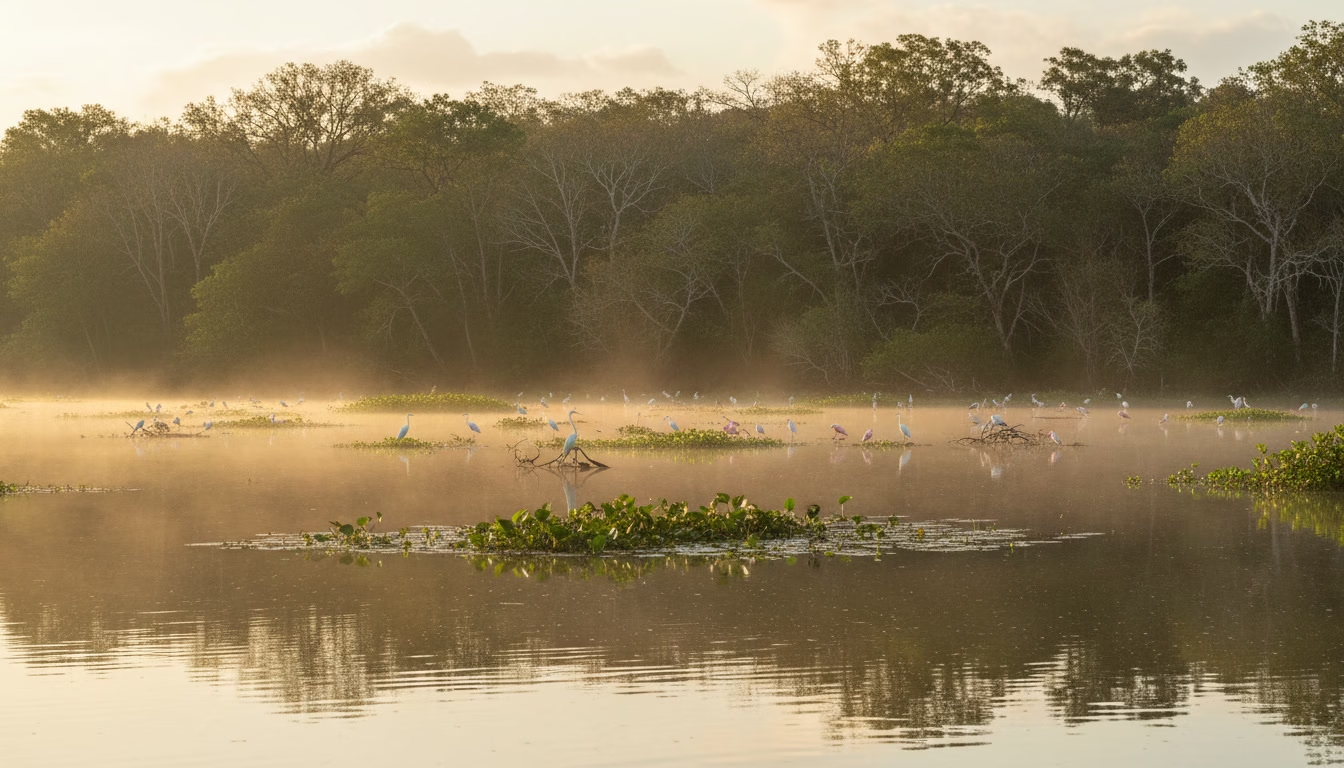
Palo Verde National Park, nestled in the province of Guanacaste, is one of Costa Rica’s most ecologically rich protected areas. With its wetlands listed as a RAMSAR site, its tropical dry forests and its lagoons teeming with aquatic birds, it offers a naturalist experience of rare intensity. I have known this place for several years, and every visit reveals something the previous one left in the shadows. This guide gathers everything you need to know to plan your trip to Palo Verde in the best possible conditions.
| Criteria | Details |
|---|---|
| Location | Guanacaste Province, Río Tempisque basin |
| Area | 18,418 hectares |
| International status | RAMSAR site since 1991 |
| Opening hours | Every day from 8:00 am to 4:00 pm |
| Entrance fee | Approx. 12 USD (foreigners) |
| Best period | December to April (dry season) |
| Access from Liberia | Approx. 50 km, paved road then gravel track |
| Main activities | Birdwatching, boat trip, hiking |
| Bird species recorded | Over 300 |
| On-site accommodation | OTS biological station (dormitory and rooms), camping |
Where is Palo Verde National Park located in Costa Rica?
Location in Guanacaste Province
Palo Verde National Park is situated in Guanacaste Province, in north-western Costa Rica. It lies in the lower basin of the Tempisque, at the confluence of the Tempisque and Bebedero rivers, about 30 km west of Cañas and 50 km south of Liberia. This geographic position, well off the beaten tourist trail, gives it a singularly wild atmosphere.
Area, wetlands and RAMSAR status
The park covers 18,418 hectares, roughly half of which consists of wetlands. These aquatic environments, fed by the seasonal floods of the Río Tempisque, earned the park its listing on the Ramsar Convention’s list of internationally important wetlands in 1991. This recognition reflects the strategic role that Palo Verde plays in preserving Central American biodiversity.
Why Palo Verde National Park is one of Costa Rica’s richest natural sites
A mosaic of ecosystems: mangroves, marshes, dry forests and lagoons
What makes Palo Verde unique is the density of different ecosystems you pass through within just a few kilometres. The park brings together more than 13 distinct habitat types: mangroves, fresh and brackish water marshes, flooded forests, wooded savannahs, forests on limestone hills and tropical dry forests. Each shelters species adapted to its specific conditions, which multiplies opportunities for observation.
The tropical dry forest deserves particular attention. It sheds its leaves in the dry season, making wildlife observation easier while offering surprisingly bright landscapes. These forests represent only 2% of the world’s land surface but harbour around 10% of the planet’s biodiversity.
Over 750 plant species and emblematic flora
The park’s flora is well documented in its richness: more than 750 plant species have been identified according to Visit Costa Rica data. Among them is the palo verde tree itself, whose trunk and branches display a characteristic pale green hue that gave the park its name. You also find pochote, Spanish cedar, the guanacaste tree — Costa Rica’s national symbol — and five of the six mangrove species present in the whole country.
Wildlife at Palo Verde National Park: birds, crocodiles and mammals
A paradise for birdwatching
Palo Verde National Park is a world reference for ornithologists. More than 300 bird species have been recorded, among them permanent residents and migrants arriving from North America between December and March. You will encounter the Jabiru stork, roseate spoonbill, scarlet ibis, grey herons, egrets, jacanas and the scarlet macaw, a threatened species nesting on Isla Pájaros.
Laguna Palo Verde is the convergence point for thousands of aquatic birds between September and March. A 20-metre wooden boardwalk allows you to observe the colonies from the bank without disturbing them.
Emblematic reptiles: crocodiles, iguanas and snakes
The Río Tempisque is one of the places in Costa Rica where American crocodiles can be observed most easily, particularly from a boat. These reptiles, which can exceed 4 metres in length, bask on the banks during the warmest hours. The park also supports large populations of green iguanas, very visible on branches above the water, as well as more than 55 amphibian and reptile species recorded in total.
Mammals and rare species to observe in the park
The forests of Palo Verde are home to howler monkeys and white-faced capuchin monkeys, whose calls resonate from dawn. You may also encounter white-nosed coatis, white-tailed deer, collared peccaries and raccoons. The puma and jaguarondi are present but extremely rare to observe. The best strategy remains sitting still near a water source and waiting, especially in late afternoon.
What to do at Palo Verde National Park? The best activities
Hikes on the main trails
The park has several marked trails suited to different fitness levels. The Sendero La Roca (540 metres) is the most accessible: it leads to a mirador with views over the lagoon, the Tempisque and the Gulf of Nicoya. The Sendero El Guacayán (1.4 km, steeper) offers another viewpoint over the lake. The Sendero La Cantera (1.4 km) winds through a variety of natural landscapes from the river banks to the limestone formations.
Boat trip on the Río Tempisque
This is probably the most memorable activity in the park. Boat excursions on the Río Tempisque, lasting approximately 1.5 to 2 hours, allow you to approach crocodiles, iguanas and birds at a respectful distance. Departures operate from the Puerto Humo landing or from the jetty near the administrative centre. I recommend choosing a bilingual naturalist guide to get the most out of the outing.
Wildlife watching with a naturalist guide
Palo Verde lends itself particularly well to guided outings, as much of the wildlife is discreet and difficult to locate without experience. The Organisation for Tropical Studies (OTS), which manages the biological station at the heart of the park, offers half-day and full-day natural history programmes including guided walks and entrance fees. Advance booking is essential.
Exploring the park by mountain bike
The OTS biological station also offers mountain bike hire to explore the park’s internal tracks at your own pace. It is an original way to cover greater distances between observation zones while remaining silent, which increases the chances of approaching wildlife. The tracks are only passable during the dry season.
The must-see sites in the park
Laguna Palo Verde and its thousands of birds
The Palo Verde lagoon is the beating heart of the park. From September to March, it gathers thousands of aquatic birds that congregate there to feed and breed: herons, egrets, ibis, whistling ducks and moorhens form impressive colonies. The 20-metre observation boardwalk allows you to get very close without disturbing the wildlife. It is one of the best ornithological observation spots in Central America.
Isla Pájaros, the bird island
Situated in the Río Tempisque facing the park, Isla Pájaros covers 2.3 hectares and hosts the largest nesting colony of black-crowned night herons in Costa Rica. Threatened species such as the scarlet macaw and the roseate spoonbill also find refuge here. The island is not accessible on foot, but boat tours pass very close by, offering exceptional views of the colonies.
The panoramic viewpoints of La Roca and El Guacayán trails
These two vantage points are among the most photographed in the park. From the Sendero La Roca mirador, the view sweeps across the lagoon, the Tempisque floodplain and, on clear days, the Gulf of Nicoya on the horizon. The El Guacayán trail mirador, more demanding to reach, offers a different perspective on the limestone hills and forested areas. Plan to be there early in the morning for the best light and birdlife.
How to visit Palo Verde National Park
Access from San José, Liberia or Nicoya
From San José, take Route 1 (Inter-American Highway) northwards to Bagaces, a journey of about 240 km taking roughly 3.5 hours. At Bagaces, turn left onto a gravel track and continue approximately 20 km to the park entrance, then a further 10 km to the administrative centre. From Liberia, allow 50 km heading south on the same road. You can also reach the park by river from Puerto Humo on the Nicoya side by hiring a boat.
Park entrances and river jetties
The park has four main entrances: Los Negritos, Palo Verde, La Catalina (which hosts the OTS biological station) and Chamorro. The latter has a jetty, an observation tower and a hostel with 36 spaces. Access via the Tempisque river operates from Puerto Humo, about 2 km from the administrative zone by water. A 4×4 vehicle is strongly recommended for the internal tracks, particularly after rain.
Practical information for planning your visit
Opening hours and entrance fees
The park is open every day from 8:00 am to 4:00 pm. The entrance fee is approximately 12 USD for foreign visitors, payable at the gate. For OTS guided natural history programmes, the fee includes the guide and entrance. A typical local meal on site is available for around 10 USD per person. The park’s administrative offices are located in Bagaces, at the junction of the entrance road and the Pan-American Highway.
Can you sleep in or near the park?
Yes, and it is an option I strongly recommend to serious naturalists. The OTS biological station, located inside the park itself, offers dormitories and private rooms, meals in a communal dining room and guide services. Camping is also possible near the ranger station. About fifty minutes from the entrance, a converted former hacienda offers considerably more comfort, with ornithological guiding and boat trips included.
Essential tips for preparing your visit
The access track from Bagaces is gravel for 20 km and can become very difficult after heavy rain. A 4×4 or high-clearance vehicle is essential in the wet season. Bring sufficient water, sun protection, a strong insect repellent and binoculars. The earliest morning boat departures are the most productive for birdwatching. Book OTS programmes several days in advance, especially between January and March.
What is the best time to visit Palo Verde National Park?
Dry season or wet season: advantages and differences
The dry season, from December to April, is the preferred period for visiting Palo Verde. Roads are passable, trees have shed their leaves making wildlife easier to spot, and North American migratory birds swell the ranks of the residents. It is also the period when animals concentrate around water sources.
The wet season, from May to November, transforms the park into a vast flooded area. Lagoons expand, nesting aquatic birds become active, but tracks often become impassable. From September to November, Laguna Palo Verde reaches its highest level and the colonies of aquatic birds are spectacular, for those who can access the park by boat from Puerto Humo.
What to see around Palo Verde National Park
Catarata Llanos de Cortes
Just 20 km north of Bagaces on Route 1, the Catarata Llanos de Cortes is a wide, shallow waterfall that drops into a natural pool suitable for swimming. Access is straightforward from the main highway, with a car park and toilets on site. It is open from 8:00 am to 4:00 pm, with a modest entrance fee. The walk from the car park to the falls takes under 10 minutes. It makes an ideal stop on the journey to or from Palo Verde.
Other natural sites to discover in the region
The Guanacaste region is rich in complementary destinations. The Lomas Barbudal Biological Reserve, neighbouring Palo Verde, shares the same dry forest ecosystems and hosts one of the world’s greatest concentrations of wild bees. Further north, Rincón de la Vieja volcano offers spectacular volcanic landscapes with hot springs and mud geysers. The beaches of Nosara or Tamarindo easily complete a circuit through the region.
FAQ about Palo Verde National Park
How much time do you need to visit Palo Verde National Park?
Allow at least one full day to combine a hike on the trails with a boat trip on the Tempisque. Two days allow you to make the most of the dawn outings, the most productive for birdwatching, and to explore the different zones of the park more comfortably. Enthusiastic ornithologists can easily spend three days there without repeating themselves.
Do you need a guide to explore the park?
It is not compulsory for hikes on the marked trails, but a naturalist guide radically changes the experience. They identify bird species by ear, spot crocodiles and monkeys long before you do, and place each observation in its ecological context. For boat tours, a guide is systematically included in the service. The OTS provides English-speaking and Spanish-speaking guides.
Which animals are easy to spot?
Green iguanas are ubiquitous along the banks and practically guaranteed on every visit. Crocodiles are very visible from the boat on the Tempisque. Howler monkeys make their presence known from dawn and are easy to locate in the trees. Herons, egrets and ibis can be observed without difficulty around the lagoon. Raccoons and coatis often appear in late afternoon near the station.
Is the park suitable for families and beginners?
Yes, provided you prepare well. The main trails, such as La Roca, are short and not technically demanding, accessible to children from around 6 years old. The boat trip is ideal for families as it requires little physical effort while guaranteeing numerous sightings. The gravel access track from Bagaces remains the only real logistical obstacle, requiring a suitable vehicle.