
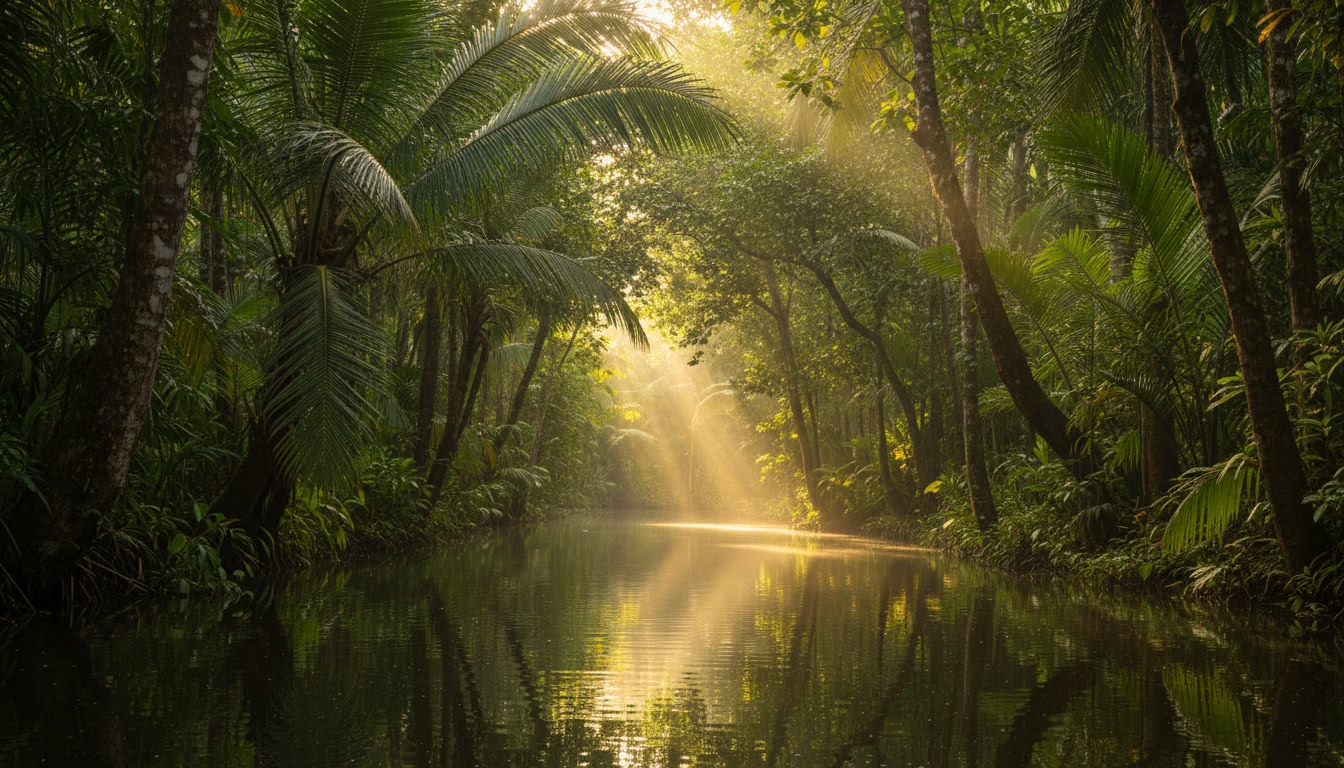
Tortuguero National Park is one of the most singular destinations in Costa Rica. Tucked along the northern Caribbean coast in Limón Province, this territory of nearly 77,000 hectares can only be reached by boat or plane. No roads, no cars: just a labyrinth of canals, a tropical rainforest that seems to stretch on forever, and wildlife of a density that takes your breath away. I first set foot in Tortuguero ten years ago, and every return has confirmed the same thing: this place resembles nothing else in Costa Rica.
Here is a quick overview of the essential information to prepare your visit:
| Criterion | Key Information |
|---|---|
| Location | Northern Caribbean coast, Limón Province, Costa Rica |
| Area | 76,937 ha (including 50,284 ha of marine zone) |
| Access | Boat from La Pavona (1h, ~$6) or plane from San José (30 min) |
| Entry fees | $17 for foreign adults, $5 for children (SINAC reservation required) |
| Opening hours | 6am–12pm and 1pm–4pm, every day |
| Best time for green turtles | July to October |
| Best time for leatherback turtles | February to July |
| Recommended stay | 2 to 3 nights minimum |
| Swimming | Forbidden (dangerous currents, hammerhead sharks) |
| Accommodation | Lodges around the village, from $40 to over $300/night |
Why Tortuguero National Park Is a Key Stop in Costa Rica
Tortuguero national park is the third most visited park in the country, and its reputation is no accident. It shelters the most important green sea turtle nesting site in the entire Western Hemisphere. Every year, thousands of turtles climb onto its dark sand beaches to lay their eggs in a millennial ritual that has not changed one bit.
But this park is worth far more than a single spectacle. Its network of freshwater canals, flooded forests and lagoons is home to 138 species of mammals, more than 442 species of birds, 58 reptile species and around one hundred amphibian species. After Corcovado, this is the place in Costa Rica where your chances of spotting a jaguar are highest.
For a traveller trying to understand what tropical biodiversity truly means, Tortuguero offers something rare: the impression of entering an intact ecosystem where humans are merely passing observers.
Where Tortuguero Is Located and What Makes This Park Unique
Tortuguero national park costa rica sits in the north-east of the country, wedged between the Caribbean Sea to the east and a vast network of canals and lagoons to the west. The village of Tortuguero itself stands on a narrow strip of land between the ocean and the lagoon, about 250 km from San José.
What makes this place truly unique is the complete absence of roads. Water is the only means of transport throughout the park. The Tortuguero canals form the second largest wetland network in the country. This geographical constraint has paradoxically protected the area: without easy land access, human pressure has remained limited.
Annual rainfall exceeds 6,000 mm, making this one of the wettest areas in Central America. This extreme climate sustains vegetation of remarkable density, dominated by humid and very humid tropical forests. It is precisely this excess of life that gives Tortuguero its nickname of “Little Amazon.”
How to Get to Tortuguero National Park
Reaching Tortuguero by Boat, Transfer, Car or Plane
The most commonly used route passes through La Pavona landing, accessible by car from San José in 3 to 3.5 hours via Guápiles. You leave your vehicle in the supervised car park (around $10/night) and take a public boat to the village ($6 per person, departures at 7:30am, 11am, 1pm and 4:30pm). The crossing takes around one hour through canal-flanked vegetation.
From San José by bus, you need two connections: San José–Cariari, then Cariari–La Pavona. The total journey takes around 3 hours of bus travel for about $9. From Puerto Limón, a boat leaves from Moín port, but this journey takes 4 hours for $40 and is rarely recommended. By plane from San José, allow 30 minutes and a considerably larger budget, but the flight over the forest alone makes it worthwhile.
Which Way to Travel Based on Your Budget and Length of Stay
If you have fewer than ten days in Costa Rica, flying on the way in (Sansa or Nature Air) and taking the boat back is the most efficient combination. You save half a day and arrive at the lodge in the morning.
For a tight budget or a stay of more than a week, renting a car to La Pavona then taking the public boat remains the most economical and enjoyable option. The boat crossing is already an experience in itself: the canals are alive, and you often spot the first animals well before reaching the village.
When to Visit Tortuguero National Park
Best Time to Watch Sea Turtles
Four species of sea turtles frequent the beaches of tortuguero national park. The leatherback turtle, the largest living species, comes to nest from February to July. The green turtle, the park’s emblematic species, nests from July to October, with a peak in August and September. Hawksbill and olive ridley turtles are also present but in smaller numbers.
If turtle watching is your priority, plan your stay between July and September. That is when the beaches are most active at night. Night tours are led by licensed guides and generally last two hours, for around $30 per person.
Weather, Rain and Climate: What to Expect on the Ground
In tortuguero costa rica, there is no dry season in the strict sense. Humidity hovers around 98% throughout the year, and rain is part of daily life. The wettest months are July and December. The driest are March, April and October, but “driest” does not mean “no rain.”
The best weather strategy is to arrive early in the morning, when skies are often clearer, and always carry a lightweight waterproof poncho. The heat is constant, between 25 and 30°C, with humidity that makes even short hikes physically demanding. Bring plenty of water for every excursion.
What to See in Tortuguero National Park
Canals, Lagoons and Humid Tropical Forests
The canal network of the tortuguero park includes several main routes: the Río Tortuguero (4.3 km), Caño Harold (3.5 km) and Caño Palma (5.1 km), accessible from Laguna Penitencia. These waterways thread through a remarkably dense forest of giant palms, strangler figs and epiphytic plants.
Navigating early in the morning, ideally from 6am, offers the best chances of encountering wildlife. The water is calm, the air still cool, and the sounds of the forest are at their peak. It is in these moments that the park truly reveals its nature: herons come down to the banks, monkeys stir in the canopy, and caimans warm themselves in the rising sun.
Wild Beaches and the Caribbean Coastline
Tortuguero’s beaches stretch over 35 km of Caribbean coastline. The sand is dark, almost black, and the waves powerful. Swimming is strictly forbidden due to violent currents and the presence of hammerhead sharks. This is not a leisure beach but a raw landscape with something almost prehistoric about it.
Outside nesting season, you can walk freely on the beach between 6am and 6pm. In season, access is restricted from March to end of October between 6pm and 6am to protect nesting females. An early morning walk along the coastal trail often reveals fresh tracks in the sand: tangible proof that the night was busy.
Tortuguero Village and Its Caribbean Atmosphere
The village of Tortuguero has around 1,800 inhabitants. It consists of one or two colourful main streets, with street art on the walls and restaurants serving rice and black beans while looking out over the water. The atmosphere is reminiscent of Jamaica at times: music, vivid colours, slow pace.
You can cross the village from end to end in fifteen minutes on foot. There are a few craft shops, a small turtle museum, Caribbean cuisine restaurants and local agencies offering excursions. As there is no ATM in Tortuguero since Banco Costa Rica’s machine was permanently removed, bring enough cash before arriving.
What Wildlife to See in Tortuguero
Sea Turtles, Caimans, Manatees and Monkeys
Sea turtles remain the main attraction of costa rica national park tortuguero, but the aquatic wildlife does not stop there. Spectacled caimans regularly patrol the canal banks, camouflaged among floating logs. Manatees, endangered marine mammals, frequent the calmer areas of the park: spotting one remains a rare and silent encounter.
Three monkey species inhabit the park: spider monkeys, howler monkeys and white-faced capuchins. Sloths are also very common, hanging from trees along the canal banks. River otters, Baird’s tapirs and jaguars complete an exceptional wildlife picture, though the latter remain difficult to spot.
Birds, Amphibians, Reptiles and Extraordinary Biodiversity
More than 442 bird species have been recorded in the park, making it one of Central America’s major birdwatching destinations. Toucans, green macaws, herons, green ibises, kingfishers, trogons and roseate spoonbills can all be spotted in the canals and forest. Bird enthusiasts can easily spend an entire day observing species without tiring.
On the reptile and amphibian front, Tortuguero lists 58 reptile species and over one hundred amphibians, roughly 20% of all the country’s amphibian species. The red-eyed tree frog, typical of the Costa Rican Caribbean, is frequently encountered in the village as well as on the trails. Night frog-watching excursions, organised by several local guides, cost around $20 for two hours.
What Activities to Do in Tortuguero National Park
Boat Trips, Canoe and Kayak in the Canals
The canal excursion remains the flagship activity in tortuguero national park costa rica. Motorised boats cover more ground, but canoe or kayak offers a far more immersive experience: silent, close to the water, able to venture into narrow channels that motorised craft cannot enter.
Departures are generally offered at 6am, 8:30am or 10:30am. The 6am slot is the most sought-after for wildlife observation. Budget around $20 per person for a two-hour canoe outing, excluding park entry. If you book through your lodge, entry is often included in the day package.
Hiking the Trails and Climbing Cerro Tortuguero
Cerro Tortuguero is an extinct volcano rising to around 119 metres. Modest in altitude but remarkable for its panorama over the surrounding jungle and canals. The ascent is physically demanding through dense vegetation and takes around 2 hours return. Entry costs $2.30 per person.
In the terrestrial part of the park, a 2.5 km coastal trail runs alongside the beach through low forest. It offers a good alternative for those who want to walk without a guide. For trails inside the canal network, a boat is needed. Bring closed-toe shoes: the park now requires them for all land hikes.
Night-time Sea Turtle Watching in Season
Night outings to observe sea turtles are tightly regulated. A certified guide is mandatory: it is not possible to go to the beaches alone after 6pm between March and October. Group sizes are limited, artificial lights are banned, and mobile phones must remain switched off or in aeroplane mode.
Tours run in two time slots: 8pm–10pm or 10pm–midnight. Your guide collects you at the lodge. Bring dark-coloured clothing, effective insect repellent and walking shoes. The average price is around $30 per person. Advance booking is strongly recommended in high season, from July to September.
The Turtle Museum and Nature Experiences Not to Miss
The village’s turtle museum is a short but informative stop. It explains the sea turtle life cycle, traces the history of the park’s creation in 1970 and presents current conservation challenges. Panels have English translations and a short subtitled film is screened every hour. Hours: 10am–12pm and 2pm–5pm. Nominal entry fee.
Other experiences not to miss: the night frog outing ($20, 2 hours), the dawn climb of the Cerro, and a simple stroll through the village at sunset. Tortuguero is lived as much in its in-between moments as in its organised activities.
Visiting Tortuguero With or Without a Guide
Why a Naturalist Guide Genuinely Improves the Experience
I have visited Tortuguero both ways, and the difference is striking. Without a guide, you navigate the canals spotting obvious animals. With a good naturalist, you find the motionless sloth fifteen metres up in the canopy, the camouflaged caiman under a branch, the pit viper asleep on a liana. A trained eye radically changes what you see.
Local guides know animal habits, the times when species are most active, and canal branches rarely used by large tour operators. They usually speak Spanish and English. French-speaking guides do exist but are fewer in number: enquire when booking your lodge.
Guided Excursions, French-Language Tours and Booking Tips
Most lodges offer all-inclusive packages covering transfers from San José, accommodation, meals and the main excursions. This is usually the simplest solution, especially for a first trip to Tortuguero. Prices range from $200 to $500 per person for two nights depending on the lodge category.
For independent travellers, local village agencies offer full-day or half-day excursions. Book the previous evening for the following morning. In high season (July–September), 6am departures are often fully booked by the evening before. Some San José agencies offer French-language tours with bilingual guides.
Fees, Hours and Access to Tortuguero National Park
Entry Prices, Online Booking and Park Sectors
Entry to tortuguero national park costs $17 for foreign adults and $5 for children under 12. The ticket is valid for the full day. Booking must be done online via the official SINAC portal (serviciosenlinea.sinac.go.cr), at least 24 hours in advance. Payment at the entrance is no longer accepted.
The park is divided into two main sectors bookable on SINAC: the Cuatro Esquinas sector (canals and forest) and the Cerro Tortuguero sector (volcano ascent). The park opens every day from 6am to 12pm, then 1pm to 4pm. If your canoe tour includes entry, make sure the SINAC reservation is handled by your guide or lodge.
Rules to Follow to Protect the Wildlife and Beaches
Beach access is restricted between 6pm and 6am from March to end of October to protect nesting females. Outside these hours, walking on the sand is unrestricted. Using artificial lights or a mobile phone on the beach in the presence of turtles is strictly prohibited. Violators may be refused park access.
In the canals and on the trails, feeding animals, collecting plants or shells, and approaching wildlife closer than two metres are all forbidden. Drones are banned throughout the park perimeter. Alcohol and illicit substances are also prohibited. These rules are not symbolic: rangers enforce them.
Where to Sleep and Eat in Tortuguero
Lodges, Hotels and Accommodation for Every Budget
Most accommodation options around tortuguero national park are wooden lodges built alongside canals or facing the lagoon. Options cover a wide range. At the budget end, expect $40 to $80 per night for a room with private bathroom. In the mid-range, Laguna Lodge, Pachira Lodge or Aninga Lodge run between $150 and $250 full board.
At the top end, Manatus Lodge and Tortuga Lodge represent the best local offer, with swimming pools, canal terraces and attentive service. Budget over $300 per night full board. Most lodges have a pool, invaluable in this humid heat where sea swimming is impossible. Book well in advance for July and August.
Included Meals, Village Restaurants and Local Specialities
Costa Rican Caribbean cuisine differs from what you eat in the rest of the country. It is spicier, more flavourful, with African and Jamaican influences. The base dish remains rice and beans, cooked in coconut milk, served with fresh fish or chicken. Pan bon, a sweet spiced bread, is a local speciality worth trying at breakfast.
In the village, a handful of restaurants line the waterfront. Prices are reasonable: between $8 and $15 for a main course. A key reminder: there is no ATM in Tortuguero. Bring enough US dollars in cash from San José or La Pavona, and check before arriving whether your lodge accepts cards.
Practical Tips for a Successful Visit to Tortuguero
What to Pack for a Stay in a Humid Tropical Zone
Tortuguero requires specific preparation. Here is what I systematically pack:
- A lightweight waterproof poncho (essential – umbrellas are awkward in the canals)
- A waterproof bag or dry bag to protect cameras and documents
- Closed-toe, waterproof shoes (light boots or hiking shoes)
- DEET-based insect repellent, enough for a full week
- Light long-sleeved clothing for night excursions
- A pair of binoculars (transforms canal excursions entirely)
- Cash in US dollars (minimum $150–200 for 2 nights)
Keep luggage light: space on public boats is limited, and hauling a large suitcase across the muddy village quays is no fun.
Mistakes to Avoid on the Ground
The first mistake I regularly see: arriving without a SINAC reservation. The park does not sell tickets on site. If you have not booked online in advance, rangers will refuse you entry, even if your guide is waiting inside.
Another common mistake: underestimating the heat and humidity. Tortuguero is not a destination for intensive hiking. Even a two-hour walk in the park can become exhausting if you do not have enough water. Plan on at least one litre per hour of activity. And never head out at night onto the beach without a licensed guide: it is forbidden, potentially dangerous, and you risk disturbing turtles at the most critical moment of their life cycle.
FAQ on Tortuguero National Park
How Many Days Should You Plan for Tortuguero?
Two nights on site, meaning three full days, is the minimum to enjoy the park without rushing. The first day is often largely taken up by the journey from San José (3 hours by road plus 1 hour by boat). The second day allows for the canals in the morning and a hike in the afternoon. The third day is ideal for the night turtle outing and a village visit.
If you can stay four days, even better. That leaves time for a night frog outing, the dawn Cerro climb, and a few free hours in the village without rushing for the return boat.
Can You Swim in Tortuguero?
Sea swimming is strictly forbidden on the park’s beaches. Currents are violent and unpredictable, and the area is frequented by hammerhead sharks. This is not a symbolic prohibition: several serious accidents have occurred. Most lodges have a pool, which is the only sensible option for cooling off.
Swimming in the canals is also inadvisable. The presence of caimans and murky waters make it unadvisable, even if it is not strictly forbidden outside the park’s protected zones.
Is Tortuguero Suitable for a Family Trip?
Yes, provided you adapt the programme. Children over six generally enjoy canal excursions, the visible wildlife and the village atmosphere a great deal. The turtle museum is accessible and engaging for younger children. Night turtle outings are allowed from age six according to most guides, but can be tiring for very young children.
Family-friendly lodges with swimming pools make the stay much more manageable in this heat. Bring age-appropriate insect repellent, closed-toe shoes for everyone and a basic first aid kit. The boat journey from La Pavona is generally well-enjoyed by children, who love spotting the first animals on the banks.
Should You Book Excursions and Park Entry in Advance?
Park entry must be reserved compulsorily online via SINAC, at least 24 hours before the visit. Without a reservation, access is refused. Create an account on serviciosenlinea.sinac.go.cr before leaving home, preferably on a computer (the site is poorly optimised for mobile use).
For night turtle excursions, advance booking is strongly recommended in high season (July–September), as group sizes are limited. Morning canoe tours are generally booked the evening before at your lodge or with local village agencies. In low season, much can be arranged directly on arrival.