
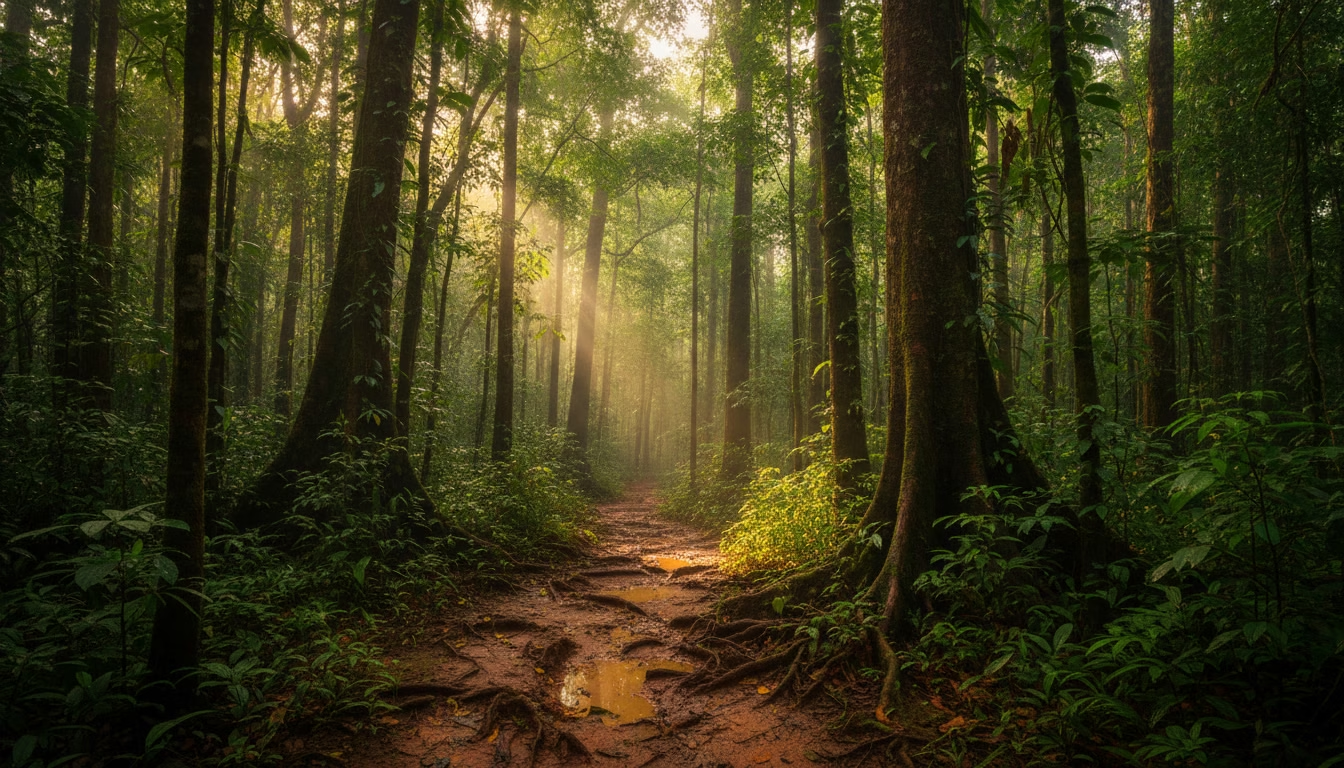
Corcovado National Park is one of the few places on Earth where nature still feels truly untouched. Tucked at the tip of the Osa Peninsula in southwestern Costa Rica, this park harbours a density of wildlife that defies imagination. Tapirs, jaguars, scarlet macaws, four species of monkeys — all living within a primary tropical forest covering more than 54,000 hectares. Here is everything you need to know to plan your visit.
| Park Entrance | Main Access | Highlights | Recommended Duration | Difficulty Level |
|---|---|---|---|---|
| Sirena | Boat from Bahia Drake or light aircraft from Puerto Jiménez | Abundant wildlife, biological station | 2 to 4 days | Moderate |
| San Pedrillo | Boat from Bahia Drake | Waterfalls, wild beaches, birdlife | 1 to 2 days | Moderate |
| La Leona / Carate | Car and walk from Puerto Jiménez | Solitude, Carate beach, reptiles | 1 to 3 days | Moderate to difficult |
| Los Patos | Car from La Palma | Dense forest, rivers, trek to Sirena | 2 to 4 days | Difficult |
| El Tigre | Car from Puerto Jiménez | Short circuits, waterfalls, varied wildlife | 1 day | Moderate |
Why Corcovado National Park Is One of the Most Biodiverse Places on Earth
A Unique Ecosystem: Tropical Forests, Mangroves and Wild Beaches
Corcovado contains no fewer than 13 distinct ecosystems, from primary tropical forests to coastal mangroves, deserted beaches and wetlands. This mosaic of habitats creates exceptional conditions for wildlife. Within just a few kilometres, you move from a dense 40-metre canopy to coastal lagoons washed by the Pacific.
Exceptional Biodiversity: Iconic Animal and Plant Species
Biologist Daniel Janzen once described this territory as the most biologically intense place on the planet. Corcovado National Park shelters 500 tree species, 375 bird species and nearly 140 mammal species. It is one of the last refuges for the jaguar in Central America, and one of the only areas where all four Costa Rican monkey species coexist.
Where Is Corcovado National Park in Costa Rica
The Osa Peninsula: A Preserved Natural Sanctuary
The Osa Peninsula juts into the Pacific Ocean, roughly 330 kilometres southwest of San José. Long isolated by its rugged terrain and intense rainfall, it was spared from intensive agriculture and urban development. Today it represents one of the best-preserved areas in Central America, with Corcovado at its heart.
Size, Landscapes and Main Ecosystems of the Park
The park covers 54,000 hectares, roughly one third of the Osa Peninsula. It encompasses primary forests, transitional forests, black-sand beaches and marshy areas. The Sirena River crosses the park from east to west, creating vital wildlife corridors for large fauna.
How to Get to Corcovado National Park
Getting There from San José: Plane, Car or Bus
The fastest route from San José is by plane to Puerto Jiménez or Palmar Sur, with daily flights operated by Sansa or Green Airways (approximately 90 to 130 euros). By car, allow 6 to 7 hours via the Costanera Sur highway. The San José–Puerto Jiménez bus exists, but the journey often exceeds 8 hours including connections.
Reaching Bahia Drake, Puerto Jiménez or Sierpe
These three villages are the gateways to Corcovado National Park Costa Rica. Bahia Drake is reached by boat from Sierpe (about 1.5 hours along the Sierpe River and Pacific coast) or by light aircraft. Puerto Jiménez, more accessible, has better infrastructure and serves as the main logistical base for most visitors.
Accessing the Different Park Entrances
From Puerto Jiménez, shared taxis reach Carate (La Leona entrance) in about 2 hours on a dirt track. For Sirena, a charter flight or boat from Bahia Drake is required. Los Patos is accessible by car from La Palma, 35 kilometres from Puerto Jiménez, via a dirt road navigable in the dry season.
The Main Entrances of Corcovado Park and Their Features
Sirena: The Most Famous and Wildlife-Rich Station
Sirena is the beating heart of Corcovado National Park. This biological station, managed by SINAC, offers unrivalled wildlife-watching conditions. Tapirs wander near the buildings in the late afternoon, and encounters with white-lipped peccaries or coatis are a daily occurrence. This is where most jaguar sightings are concentrated.
San Pedrillo: Waterfalls, Jungle and Wild Beaches
Accessible only by boat from Bahia Drake, San Pedrillo is the northern entrance to the park. It features a spectacular waterfall reachable in 30 minutes on foot, deserted beaches and remarkable birdlife. It makes an excellent day-trip option from Bahia Drake lodges, with far fewer visitors than Sirena.
La Leona and Carate: A Wilder, Less Visited Zone
The La Leona entrance, near the village of Carate, gives access to the park from the south. The trail follows the beach before plunging into forest, with tidal crossing points to navigate. Carate is the last point reachable by car from Puerto Jiménez. The area attracts few groups, making it an appealing choice for travellers who prefer solitude.
Los Patos and El Tigre: For Hikers Seeking True Adventure
Los Patos is the starting point for the interior trek to Sirena, a two-day hike through primary forest involving several river crossings. El Tigre, closer to Puerto Jiménez, offers day-long circuits suitable for intermediate hikers, with strong chances of spotting monkeys and exotic birds.
What to Do in Corcovado National Park
Hiking Through the Tropical Forest
The trails of Corcovado are unlike anything I have walked elsewhere. You hike under a closed canopy, in constant humidity, with a persistent sense of being watched. The trail between Los Patos and Sirena (24 km) is the most popular interior trek, crossing bamboo forests and several fordable rivers.
Wildlife Watching and Birdwatching
Dawn is the best time for birdwatching, with the first songs starting around 5:30 am. The riverside areas around Sirena are particularly productive for tiger herons, kingfishers and boat-billed herons. 375 bird species have been recorded in the park, making it one of the richest ornithological sites in Central America.
Multi-Day Trek Across the Osa Peninsula
A 3 to 5-day trek between Los Patos, Sirena and La Leona is the most immersive way to experience Corcovado NP. Accommodation at Sirena must be booked months in advance, food needs to be carried in, and the conditions are basic. In return, you cross sections that few travellers ever see, with wildlife that shows itself more readily thanks to low visitor numbers.
Boat Trips and Coastal Exploration
Boat excursions from Bahia Drake allow you to follow the park’s coastline, spot bottlenose dolphins and sometimes humpback whales between July and November. Some operators offer swimming stops in isolated coves accessible only by sea. This is a valid option for travellers less inclined towards long-distance hiking.
What Animals Can You See at Corcovado
Large Mammals: Baird’s Tapir, Puma and Jaguar
Baird’s tapir, the largest terrestrial mammal in Central America, is regularly seen around Sirena, particularly in the early morning. The puma is more discreet, though its tracks in the mud along the trails are frequent. The jaguar remains rare to observe, but Corcovado holds one of the last viable populations in Central America, estimated at around forty individuals.
Costa Rican Monkeys: Capuchin, Howler, Spider and Squirrel
Corcovado is one of the only places in Costa Rica where all four monkey species share the same habitat. The howler monkey announces itself at dawn with deep vocalisations audible for several kilometres. The spider monkey, harder to approach, moves through the upper canopy. The white-faced capuchin is the most visible, often seen in groups along the trail edges.
The Scarlet Macaw and Many Other Bird Species
The scarlet macaw is the park’s visual symbol. You often see them in pairs crossing clearings with loud calls, or perched in sea almond trees along the beaches. Blue-headed parrots, keel-billed toucans and violaceous trogons complete an ornithological picture of rare richness. Morning sessions at San Pedrillo are particularly rewarding.
Sea Turtles and Other Reptiles
Four species of sea turtle nest on the park’s beaches: the leatherback, green, olive ridley and hawksbill. Nesting mainly takes place between July and December. American crocodiles inhabit river mouths, and the green basilisk, capable of running on water, invariably astonishes first-time visitors.
Practical Tips for Visiting Corcovado Park
Why a Certified Guide Is Compulsory
Since 2014, SINAC has required the presence of a certified guide for all visits to Corcovado National Park. This rule, sometimes criticised, is in practice a genuine safety guarantee in a dense and potentially hazardous environment. It also helps preserve the park’s resources and supports local communities. Local guides from Puerto Jiménez or Bahia Drake are often outstanding.
Booking Your Entry and Planning Ahead in High Season
Park entries are booked through the official SINAC system or via an accredited guide. The entrance fee is 18 USD per person for foreign visitors (2024 rate). In high season (December to April), places at Sirena sell out within hours. I recommend booking at least 3 months in advance for a January or February stay.
Best Time to Visit the Park
The dry season, from December to April, offers the best hiking conditions with walkable trails and wildlife concentrated around water sources. The rainy season (May to November) makes some trails impassable and river crossings dangerous, but it draws fewer visitors and the landscape is intensely green. July and August remain manageable despite the rainfall.
Where to Stay When Visiting Corcovado National Park
Accommodation in Bahia Drake
Bahia Drake offers a range of lodging from basic eco-lodges to luxury resorts. Aguila de Osa Inn and Drake Bay Wilderness Resort are two reliable options, with rates between 150 and 350 USD per night on a full-board basis. Most lodges organise excursions directly to San Pedrillo and Sirena.
Lodges and Hotels Around Puerto Jiménez and Cabo Matapalo
Puerto Jiménez is the most accessible base, with guesthouses from 30 USD per night. Cabo Matapalo, 23 kilometres to the south, hosts upmarket lodges such as Lapa Rios (awarded 5 leaves by Costa Rica’s CST certification), recognised for its environmental commitment and views over primary forest. It is an ideal base for the La Leona sector.
Sleeping at Sirena Station in the Heart of the Park
Sirena station offers dormitories and meals managed by SINAC. Rates are approximately 30 USD per night in a dorm and 25 USD per meal. Conditions are rustic: no permanent electricity, mosquito nets essential, cold water only. But sleeping there, at the core of the park, with the sounds of the forest at night, is an experience unlike anything else.
Other Activities Around Corcovado Park
Snorkelling and Diving at Isla del Caño
Isla del Caño, 20 kilometres offshore from Bahia Drake, is a marine biological reserve with exceptionally clear waters. The seabed shelters spotted eagle rays, green turtles and shoals of tropical fish. Visibility can reach 20 to 25 metres between December and April. Most Bahia Drake lodges organise day snorkelling or diving trips to the island.
Kayaking, Night Excursions and Bioluminescence
Sea kayaking around the Osa Peninsula lets you explore mangroves and coves inaccessible on foot. On certain nights, Bahia Drake bay displays an intense bioluminescence phenomenon, with plankton lighting up at the slightest movement in the water. Night excursions in the forest, led by a guide, reveal poison dart frogs, fiddler crabs and arboreal snakes.
Nature Adventures on the Osa Peninsula
Beyond the park, the Osa Peninsula offers waterfalls to discover, such as those of the Piro River or the Dos Brazos de Tigre area, a former gold-mining village now converted to ecotourism. Mountain biking, canopy and river swimming circuits round out the offering. The Osa Wildlife Sanctuary, near Puerto Jiménez, houses wildlife in rehabilitation.
FAQ: Everything You Need to Know Before Visiting Corcovado National Park
How Long Should You Allow to Visit Corcovado?
A single day from Bahia Drake allows a visit to San Pedrillo or a boat trip to Sirena for a day excursion. But to truly feel the park, a minimum of 3 to 5 days is needed, including at least one night at Sirena. The Los Patos–Sirena–La Leona trek takes 3 full days and represents the most complete experience.
Can You Visit Corcovado Park Without a Guide?
No. Since 2014, regulations for Corcovado park require the presence of a SINAC-accredited guide for every entry into the park. There are no exceptions to this rule, even for experienced hikers. Guides are available in Puerto Jiménez, Bahia Drake and through the main lodges in the area.
Which Is the Best Entrance for Seeing Wildlife?
Sirena is by far the entrance offering the best wildlife-watching opportunities. Animal density there exceeds all other zones in the park. The first two hours after dawn are the most productive. If you can only spend one night, Sirena is the logical choice, provided you book well in advance.
Do You Need to Be an Experienced Hiker to Visit Corcovado?
Day excursions from Bahia Drake or the El Tigre circuit are accessible to occasional walkers in reasonable physical condition. The Los Patos–Sirena trek, however, demands solid physical fitness, resilience in humid heat and the mental readiness for 7 to 8-hour days hiking with a loaded backpack.